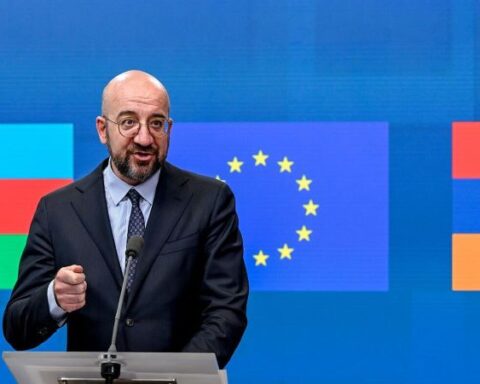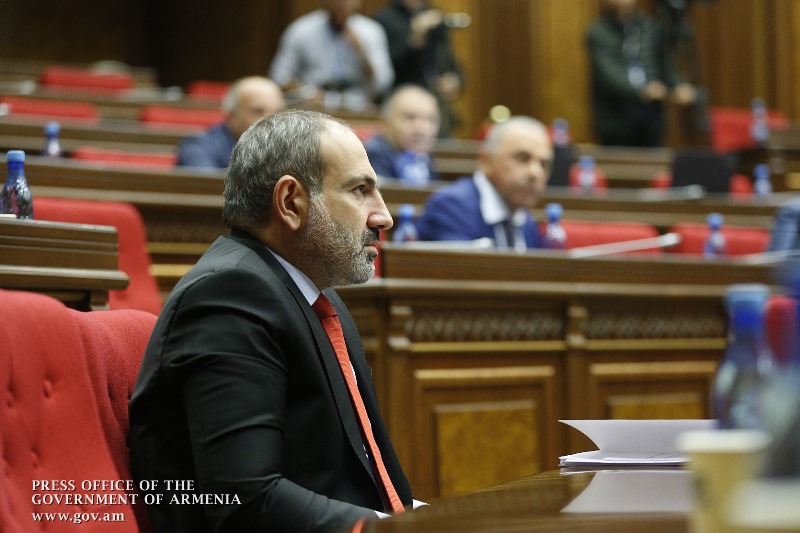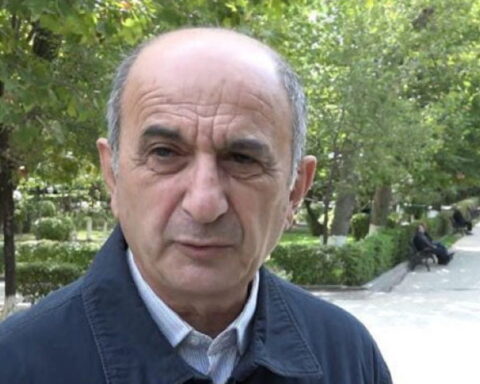
«Ramgavar Mamoul»’s exclusive interview with the President of the Standing Committee on Science, Education, Culture, Diaspora, Youth and Sport of the 7th convocation of the National Assembly of the Republic of Armenia, Mkhitar Hayrapetyan.
-Mr. Hayrapetyan, please briefly introduce to our readers the Standing Committee on Science, Education, Culture, Diaspora, Youth and Sport, which you chair. During the summary of your one-year activities, you spoke about the formation of three sectoral subcommittees. Which sectors do these subcommittees pertain to, and what can you say about them?
The scope of activities of the Standing Committee on Science, Education, Culture, Diaspora, Youth and Sport is extremely broad. The committee conducts preliminary discussions of draft laws pertaining to its fields of activity and other matters within the competence of the National Assembly, presents conclusions on them to the National Assembly, and also carries out parliamentary oversight.
In order to organise the committee’s work more effectively and purposefully, and for the development and improvement of sectoral legislation, we formed three subcommittees: 1) the subcommittee on science and education, chaired by Hovhannes Hovhannisyan, 2) the subcommittee on culture, repatriation, relations with the Diaspora, sport and youth, chaired by Harutyun Babayan, and 3) the subcommittee on television and radio, press and information, headed by Vahagn Tevosyan. Over the past year, the subcommittees have conducted numerous discussions on the existing problems in the respective sectors and their possible legislative solutions. In addition, we have carried out a number of regional visits to familiarise ourselves with the problems on the ground and to outline possible solutions. We have actively used another tool, the institution of parliamentary hearings. In particular, we organised hearings on the following topics: “Problems of the development of science in the field of natural sciences and prospects for the effective use of scientific results,” “Problems of science financing in Armenia,” “Reforms in the education sector and upcoming strategic challenges,” “Possible legislative solutions in the field of cinema,” and “Legislative changes in the field of audiovisual media services.” During the hearings, interested parties presented the existing problems in the aforementioned sectors, their causes and possible ways of solving them. The committee intends, on the basis of the proposals formed as a result of the discussions held, to come forward with appropriate legislative initiatives and to provide legal regulation for problems that have existed for years. Draft laws of the Republic of Armenia “On Repatriation,” “On Cinema,” and “On Television and Radio” are currently in the development stage.
At the same time, at the end of the year we succeeded in increasing the amount of funding allocated to science in the 2020 state budget, which, we are confident, will have a positive impact on the development of science in Armenia. It is noteworthy that more funds are also allocated in the budget for the Office of the High Commissioner for Diaspora Affairs. We believe that this will be a significant factor for the improvement of Armenia-Diaspora relations.
-On various occasions, there has been talk about the development of legislation on repatriation. What is this legislation about, what does it include, and at what stage is this process?
The purpose of the draft law of the Republic of Armenia “On Repatriation” is the formation of the necessary legislative foundations for promoting repatriation. The draft law will define the criteria for being a “repatriate,” the rights and obligations of repatriates, as well as the scope of privileges which, in our opinion, will serve as an incentive to encourage the immigration of our compatriots, to mitigate their possible difficulties in the mother homeland, and to ensure their rapid and flexible integration into Armenian conditions. The draft law of the Republic of Armenia “On Repatriation” is in the development stage, and once it is ready in its final form, it will be put to public discussion, and parliamentary hearings will be organised to ensure broader participation in the drafting process. I should note that we have engaged the best specialists in the field, as well as representatives of repatriates and various state structures, in the development of the draft law. The law should provide a comprehensive and complete solution to all existing problems.
-In one of your interviews, you expressed the following idea: “Armenia will be strong when the Diaspora is strong.” In your opinion, how do you envision a strong Diaspora?
We, of course, understand that it is impossible to achieve complete repatriation. On the contrary, what is important for us is the existence of strong Armenian communities and the continuity of their normal life activities. A strong Diaspora Armenian is one who is established and successful in the country of his birth, who is connected to Armenia, does not assimilate, and presents the “Armenian” brand to the world. In our deep conviction, Armenian schools have an invaluable contribution in this regard. That is why our political team supports the opening of new schools in Armenian communities, the provision of quality education, and the strengthening of ties with Armenia.
-We enthusiastically follow the reforms underway in various sectors in Armenia. We would like to hear from you: in what way and in which sectors can the Diaspora Armenian community contribute to Armenia’s progress?
The Diaspora has a strong intellectual, political, social and cultural capital, which can be realised in any sector for the benefit of Armenia’s development. In addition, every Diaspora Armenian must know that in Armenia he has a homeland, where he can come at any time, settle, and be confident that he will have a prosperous future. Armenia is not merely an emotional space; it is a modern state with broad opportunities, where you can invest and earn money. In the end, we will all benefit.
To encourage Diaspora youth and give them new opportunities to settle in Armenia, back in 2018, when I headed the Ministry of Diaspora of the Republic of Armenia, the Government launched the “nerUzh” programme for Diaspora youth. We can gladly note that it not only took root, but also became ongoing, and this year there were more participants. And the start-ups of “nerUzh” 1 have already been established, and young Diaspora Armenians have become employers in Armenia.
In addition, in 2020, the Office of the High Commissioner for Diaspora Affairs of the Republic of Armenia will implement a regulatory programme that envisages engaging Diaspora Armenian professional specialists for the improvement of various sectors of the public administration of the Republic of Armenia. Within the framework of the programme, mainly Diaspora Armenian specialists will be invited to work in the state bodies of Armenia in the direction of conducting sectoral research and studies, and developing and implementing relevant priority programmes and strategies. Diaspora Armenian specialists holding a master’s degree or higher may apply to the programme. We believe that this is yet another targeted step for the Diaspora to participate in the process of building the new Armenia.
The interview is by «Ramkavar Mamoul»*
Biographical data
Mkhitar Iosifi Hayrapetyan
Born on 15 May 1990, in Yerevan.
Education
In 2011, he graduated from the Department of Turkish Studies of the Faculty of Oriental Studies of Yerevan State University, and in 2013, the master’s programme of the same department.
Work experience
In 2012-2013, he was a member of the Student Scientific Society and the Student Council of the Faculty of Oriental Studies of Yerevan State University.
In 2010-2017, he was an expert on Middle Eastern, particularly Turkish, issues for a number of Armenian newspapers.
From 11.05.2018 to 14.01.2019, he was the Minister of Diaspora of the Republic of Armenia.
In 2011, he founded the “Association of Young Political Figures” organisation and was the vice-president of the organisation until 2015.
Since 2016, he has been the founding president of the “Centre for Civic Education and Youth Development.” He is a founding member of the “Civil Contract” party. In 2016, he became a member of the political council.
In 2019, he became the president of the Yerevan Chess Federation.
On 9 December 2018, he was elected as a member of parliament on the territorial electoral list of constituency No. 1 of the “My Step” alliance of parties.
On 18 January 2019, he was elected President of the Standing Committee on Science, Education, Culture, Diaspora, Youth and Sport of the National Assembly of the Republic of Armenia.
*«Ramkavar Mamoul» (www.ramgavar.am) is the official organ and mouthpiece of the Central Board of the Armenian Democratic Liberal Party. One of the main goals of «Ramkavar Mamoul» is to convey accurate and precise information about the developments taking place in Armenia to our readers in the Diaspora.