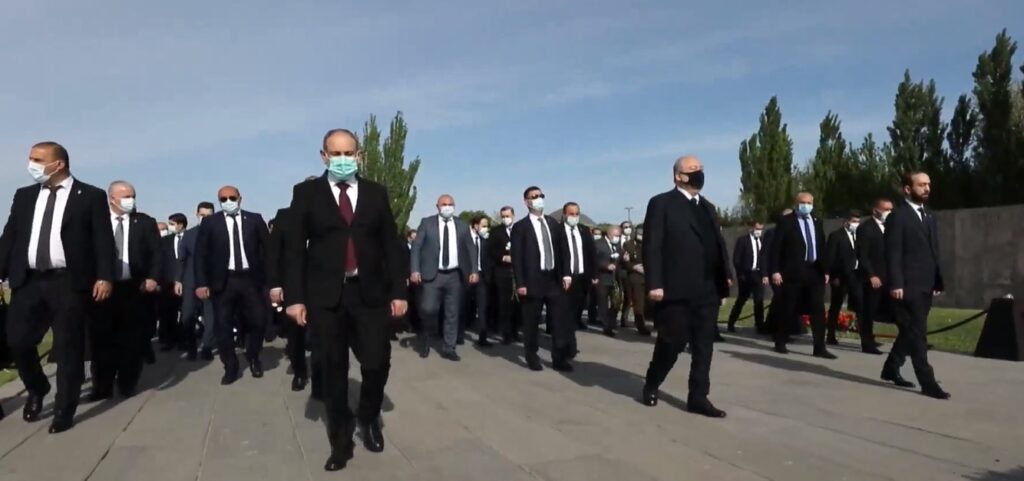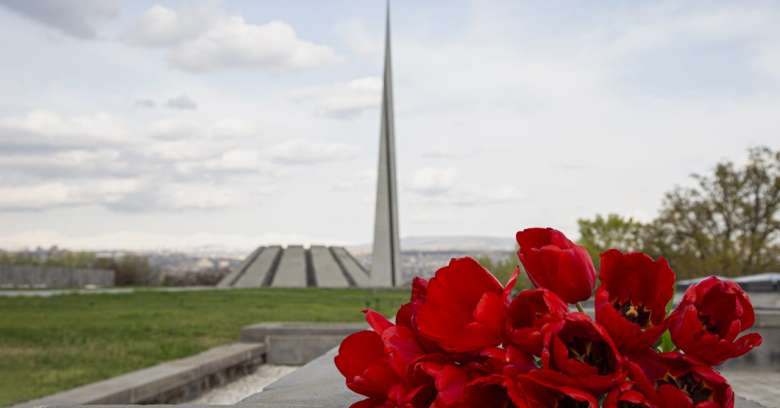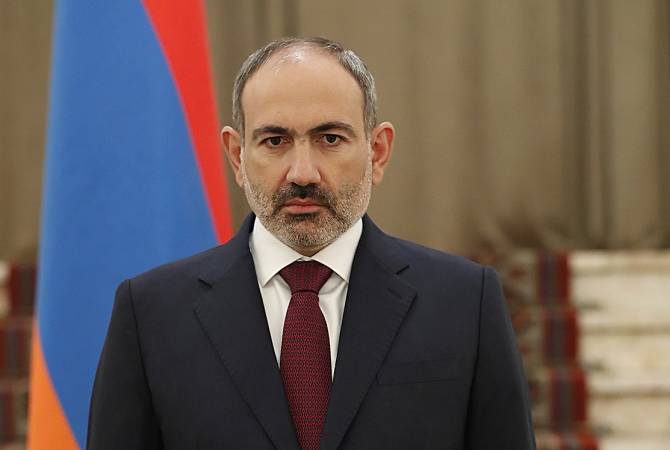
RA Prime Minister Nikol Pashinyan issued a message on the occasion of the 106th anniversary of the commemoration of the victims of the Armenian Genocide.
We present the message in full.
“Dear compatriots,
Today, as for decades, we commemorate the memory of the innocent victims of the Armenian Genocide. We pay our respects to the million and a half martyrs who, during the years of the First World War, fell victim to the criminal policies of the authorities of the Ottoman Empire.
106 years ago, the first genocide of the 20th century was carried out by the hands and design of the Young Turk government of the Ottoman Empire. What took place in those days was qualified by the great powers as a crime against humanity and human civilization. Even if millennia pass, we Armenians will continue to remember and will not allow the world to forget that on 24 April 1915, the cream of Western Armenian intellectuals was arrested and condemned to death. The intellectual, spiritual and cultural elite of the people was decapitated. The Armenian people was deprived of the right to live in its homeland. It was subjected to mass massacres and cast out of its fatherland, enduring inhuman suffering and losses of unprecedented scale. The damage inflicted on our people’s cultural and religious heritage was beyond assessment and irreparable.
Together with us, the Pontic Greeks, Assyrians and Yazidis were also deprived of their homeland. Those brotherly peoples, for us Armenians, were likewise subjected to annihilation, deprived of the right to live in their native places.
Who were the culprits of those terrible crimes, who were responsible for them? The answer is unequivocal: the Young Turk government of the Ottoman Empire, with its ideology of Turkism and Pan-Turkism, one of whose core aims was the creation of a mono-ethnic and expansionist Turkey, which in turn had given birth to the idea of Armenophobia and of ridding itself of national and religious minorities.
During the years of the Second World War, the genocide of the Jewish people was carried out under the leadership of the Nazi party of Germany. Six million Jews fell victim to the Holocaust. After the war, the criminals stood before justice and received their deserved punishment. The ideology that guided the perpetrators of genocide was also condemned. Nazism was rightly branded a criminal ideology, and today no one in the world dares to say anything in its defence.
Owing to historical circumstances, however, the same did not occur in the case of the Armenian Genocide. First, in the first half of the last century, mechanisms of justice had not yet been developed that would hold accountable such enormous crimes committed by a state. Even the term genocide did not exist.
Moreover, the Armenian people was deprived of the possibility of pursuing its cause. In the first decades following the Genocide, the voice of the Diaspora was not yet sufficiently audible; it was still healing its wounds and putting national structures back on their feet. And Soviet Armenia, until the end of the Great Patriotic War, was altogether deprived of the possibility of pursuing the matter.
The Armenian Diaspora was able to make the issue of the recognition of the Armenian Genocide heard in the decades following the Second World War. However, in that period, when the world was bipolar, Pan-Turkism was considered a thing of the historical past. The Armenian Genocide and the ideology that gave birth to it remained unpunished. And unpunished crimes and the ideologies that nourished them have a habit of recurring and re-emerging.
The Second Karabakh War, the Azerbaijani-Turkish aggression aimed at the annihilation of the Armenian people in Artsakh, Turkey’s expansionist foreign policy, and its territorial claims against Armenia are evidence of the rebirth of genocidal ideology. Armenophobia is at the core of Pan-Turkism, and its most despicable manifestations we see today in Azerbaijan, carried out by the authorities of that country.
What should our response be to that neo-Pan-Turkist threat? Only a strong, modern Armenia with powerful allies, built on the principles of democracy and the rule of law. At the same time, it is undeniable that only the condemnation of a crime halts new crimes in the future, and we highly value and attach importance to the recognition of the Armenian Genocide by various countries of the world.
What has been said, however, cannot in any way be interpreted as a rejection of regional dialogue. We are ready for it. But the dialogue we envisage cannot be from a position of strength. It can take place only on the principle of equality of rights. We will never call into question the fact of the Armenian Genocide, and let no one think that any Armenian, any political current in Armenia or the Diaspora, will ever betray the memory of our innocent victims and become an accomplice to the Armenian Genocide. It is the recognition and condemnation of the Genocide that must stop new crimes.
Dear compatriots,
24 April is the most compelling moment for our nation, our people, to reflect on the past and the future, the most opportune occasion for self-knowledge, for assessing our strengths and what we must do. The most important conclusion to be drawn from it is the following: the challenges that confronted our people at the beginning of the last century still exist today. The Second Karabakh War was vivid proof of that. Only an Armenia with a leading economy and modern security and political systems, which will rally the entire Armenian people around it, can withstand those challenges.”