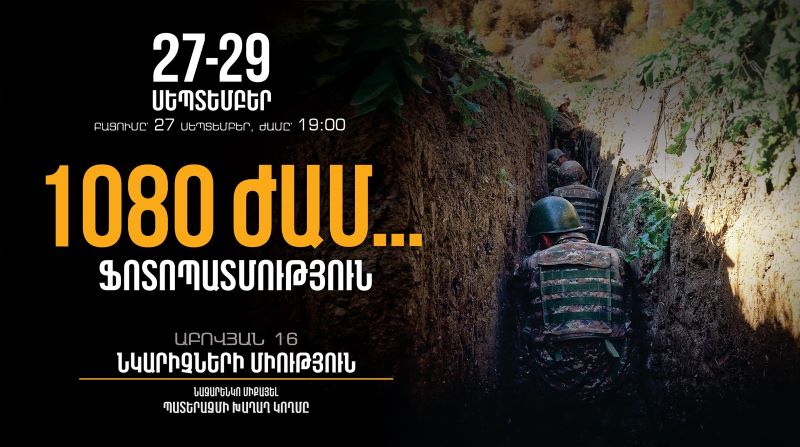
Today is the anniversary of the 44-day Artsakh war.
In memory of the Armenian sons who fell in the 44-day war unleashed by Azerbaijan against Artsakh in 2020, a minute of silence will be observed today at 11:00 in Armenia and Artsakh.
One year ago today, in the early morning of 27 September at 7:10, we received the first reports from Artsakh about the start of Azerbaijan’s air and missile attack.
Military operations proceeded along the entire length of the Artsakh-Azerbaijan line of contact, as well as in certain sections of the Armenia-Azerbaijan line of contact, also targeting populated areas.
Martial law and general mobilisation were declared in Armenia and Artsakh.
For 44 days, from the ordinary soldier to the commander, from the contract serviceman to the volunteer who went to the front, they waged a life-and-death struggle to defend the homeland. The attack on Artsakh was accompanied by numerous gross violations of international norms by the Azerbaijani armed forces, including the deliberate targeting of civilian populations and vital infrastructure, and torture of prisoners of war and civilian hostages.
After 44 days, on 10 November 2020, with the direct mediation of the Russian Federation, a trilateral statement was signed — a peace agreement according to which the greater part of the territory of the Republic of Artsakh came under Azerbaijani control: all regions outside the former NKAO, with the exception of the Lachin corridor, the city of Shushi, most of the Hadrut region, and certain villages of the Askeran and Martakert regions, while the borders of Artsakh are maintained by Russian peacekeepers.
As a result of the 44-day war, 3,777 people were killed. According to the Prime Minister of the Republic of Armenia, Nikol Pashinyan, 3,702 of them were military personnel and 75 were civilians; the whereabouts of 243 servicemen is unknown.
According to the latest data of the State Service of Emergency Situations of the Republic of Artsakh, since the ceasefire, 1,670 bodies and remains have been discovered to date. Search operations continue to this day in the occupied territories of Artsakh.
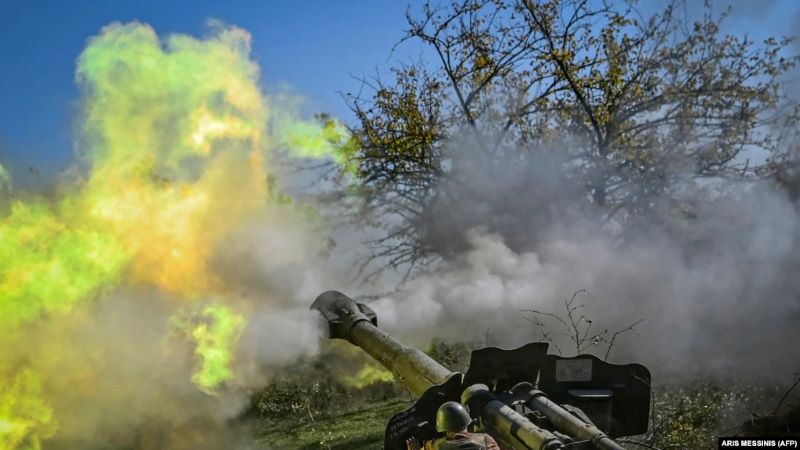
During the war, Azerbaijan used its entire arsenal, with the large-scale military use of drones, the latest technology and heavy artillery, and an official confrontation in the information field. The war was called a fifth-generation war, and in the intensity of military operations and the scale of the use of technology, it was compared to the 2003 Iraq war (between the USA and Iraq).
Azerbaijan received overt military support from Turkey. Mercenary terrorists from Syria were also involved in the fight against Armenian youth.
Many countries and international structures strongly condemned the conflict, calling on the parties to immediately cease fire and resume constructive negotiations.
Even a year later, the question of Artsakh’s status has not been resolved. Azerbaijan and Turkey are setting preconditions for the normalisation of relations with Armenia.