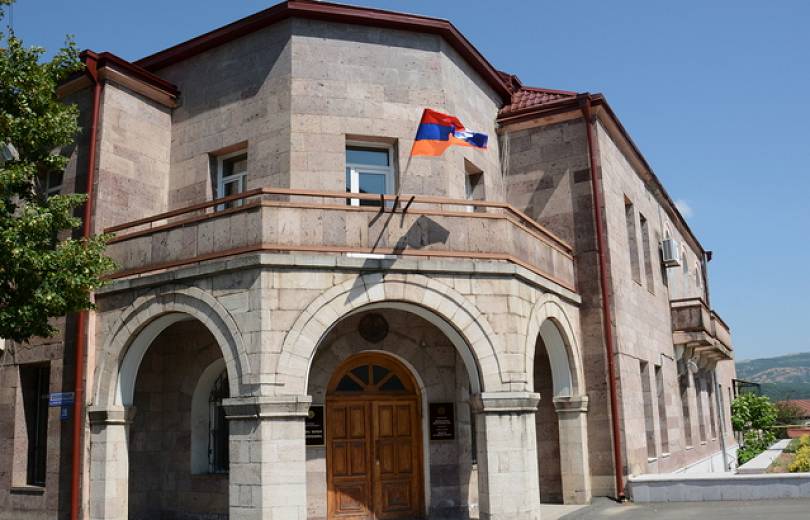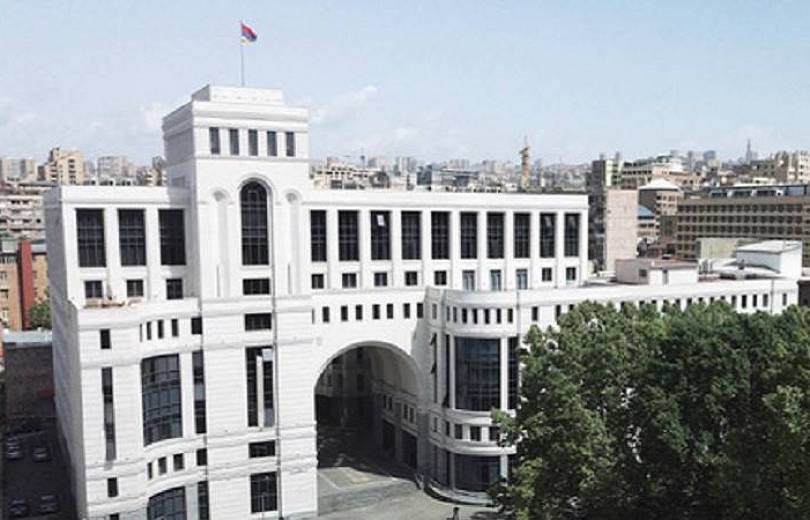
The Ministry of Foreign Affairs of the Republic of Armenia has issued a statement on the occasion of the first anniversary of the November 9, 2020 statement on the cessation of the 44-day Artsakh war.
“On September 27, 2020, with the direct participation of Turkey and the involvement of foreign armed terrorists, Azerbaijan unleashed a war against Artsakh and its people. With the aim of stopping that war, on November 9, through the mediation of the President of Russia, a trilateral statement was signed on a ceasefire and the end of all military operations in the zone of the Artsakh conflict, on the basis of which Russian peacekeeping forces were deployed in Artsakh.
Today we again bow our heads before those brave sons of Armenia who did not spare their lives for the sake of the Armenian people’s right to live and build their future, not allowing those who unleashed the war to realize their intention to completely depopulate Artsakh.
The 44-day war, which was accompanied by widespread violations of international humanitarian and human rights law by Azerbaijan, the deliberate targeting of civilian infrastructure and cultural monuments, the use of prohibited weapons and other war crimes, led to thousands of victims and tens of thousands of wounded, displaced persons and destruction. As a result of the war, a number of regions of Artsakh were subjected to ethnic cleansing, and the population became victims of war crimes and mass atrocities committed by Azerbaijan. In particular, as a result of the war, 40 thousand people were deprived of their homes and property, more than 17,000 civilian structures and infrastructures were destroyed, hundreds of civilians were killed or wounded, and the fate of many still remains unknown.
Armenia and Artsakh have consistently implemented the provisions of the trilateral statement, while merely one month after the signing of the trilateral statement, contrary to the commitment to stop at the positions occupied at the time of signing, the Azerbaijani armed forces invaded the villages of Khtsaberd and Hin Tagher in the Hadrut region of Artsakh, killing and capturing Armenian servicemen. Moreover, after the withdrawal of Armenian forces from the areas mentioned in the document, the Azerbaijani side responded by penetrating with its armed forces into the sovereign territory of the Republic of Armenia from those same areas and continuing its illegal deployment.
Azerbaijan has still not implemented point 8 of the November 9 statement, holding in captivity numerous Armenian prisoners of war, hostages and other detained persons, which is a gross violation not only of the trilateral statement but also of international humanitarian law.
The violations of the ceasefire established by the trilateral statement by the Azerbaijani armed forces are of a periodic nature, accompanied by the targeting not only of the positions of the Armed Forces of Armenia and the Artsakh Defense Army, but also of peaceful settlements and civilians, leading to both human and material losses.
Deliberately distorting and arbitrarily interpreting the provisions of the trilateral statements of November 9, 2020 and January 11, 2021 regarding the unblocking of infrastructures in the region, Azerbaijan is circulating the so-called “corridor” idea and threatening the use of force, which not only contradicts the letter and spirit of the said statements, but also aims to undermine efforts directed at reducing tensions in the region.
The continuous anti-Armenian policy openly pursued by the highest leadership of Azerbaijan, the ethnic cleansing in the territories of Artsakh that have come under Azerbaijani control through the use of force, the destruction and desecration of Armenian cultural and religious heritage, as well as the obstruction of the entry of international humanitarian organizations into Artsakh, testify that the guarantee of the right of the Armenians of Artsakh to live safely and with dignity on their ancestral land is impossible under the jurisdiction or control of Azerbaijan.
The realities formed as a result of the use of force by Azerbaijan against Artsakh and its people cannot serve as a basis for the resolution of the Artsakh conflict. Azerbaijan’s claims that as a result of the war there no longer exists in the international arena not only the Artsakh conflict but also Nagorno-Karabakh, likewise constitute a violation of the November 9 trilateral statement, because in that very trilateral statement Nagorno-Karabakh is presented as a territorial entity.
Only the full implementation of the trilateral statements of November 9, 2020 and January 11, 2021, in particular the urgent resolution of humanitarian issues of primary importance, first and foremost the unconditional repatriation of all prisoners of war, hostages and other detained persons, the clarification of the fate of missing persons and the investigation of cases of enforced disappearances, the protection of Armenian cultural and religious heritage, as well as the full restoration of the process of peaceful settlement of the Artsakh conflict, can create preconditions for ensuring lasting peace and stability in the region.
A comprehensive and lasting resolution of the conflict is possible only through peaceful negotiations under the mandate of the co-chairmanship of the OSCE Minsk Group, which presupposes the clarification of the status of Artsakh and the provision of the safe return of the displaced Armenians of Artsakh to their places of residence throughout the entire territory of Artsakh, and the realization of the right of the people of Artsakh to live freely and with dignity in their homeland, based on the right of peoples to equality and self-determination.
Armenia reaffirms its readiness to make practical efforts towards defusing the situation in the region, gradually overcoming the atmosphere of hostility, and opening an era of stability and peaceful development in the region. At the same time, for the effectiveness of the process, it is necessary that Azerbaijan also adopt a constructive position, renouncing its policy of anti-Armenianism, aggressive rhetoric and actions.”