Today is Good Friday. The services of the Armenian Apostolic Church recall the voluntary death of the Son of God for a world lost in sin.
Good Friday symbolises the sixth day of creation, when God formed Adam from the earth in His image and likeness, and then created Eve from his side and placed them in Paradise. On a Friday, Adam and Eve ate the forbidden fruit, were stripped of their glory, and the Lord, punishing man with a curse, expelled him from Paradise.
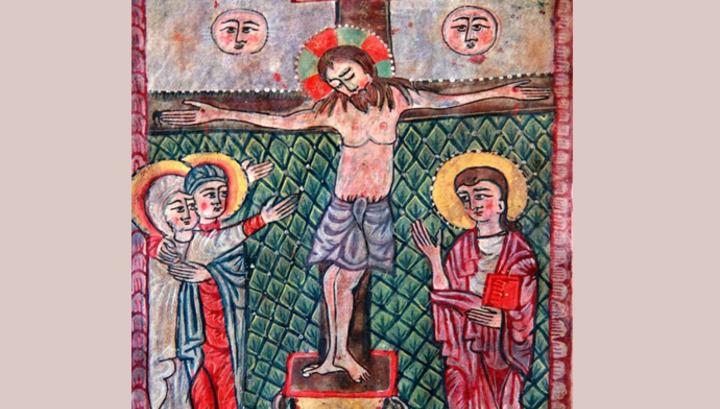
In the sixth age, God became perfect Man in the immaculate womb of the Holy Virgin — in soul, mind and body — in order to accomplish the works of salvation. On Good Friday, the Lord was arrested through the betrayal of Judas, was subjected to beating and mockery, and then, taking upon Himself the curse and condemnation of Adam, died on the cross, opened His side, and with the water that flowed from His side washed away the sins of man, and with the blood that flowed redeemed us from the service of evil (Matt. 26:47–27:56). And just as from Adam’s side his wife Eve was created, so too from the Lord’s side came His bride, the Church. Today, although there is joy for souls, since through Christ’s sufferings our souls were freed from hell, yet in the flesh it is mourning and sorrow.
Good Friday is the day of remembrance of the sufferings, crucifixion, death and burial of Jesus Christ. On that day, the Order of the Crucifixion takes place. After the evening service, during the vespers ceremony, the Order of Burial is performed, when the symbolic tomb of Jesus Christ — prepared from flowers and tree branches — is carried around the church before the faithful, for Christ has conquered death through death. Having proceeded unwaveringly through sufferings to a shameful death on the cross, He has given humanity the possibility of eternal life, and salvation from spiritual death to the whole world.