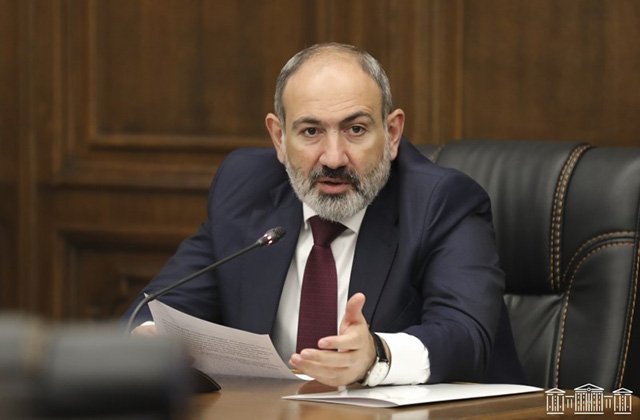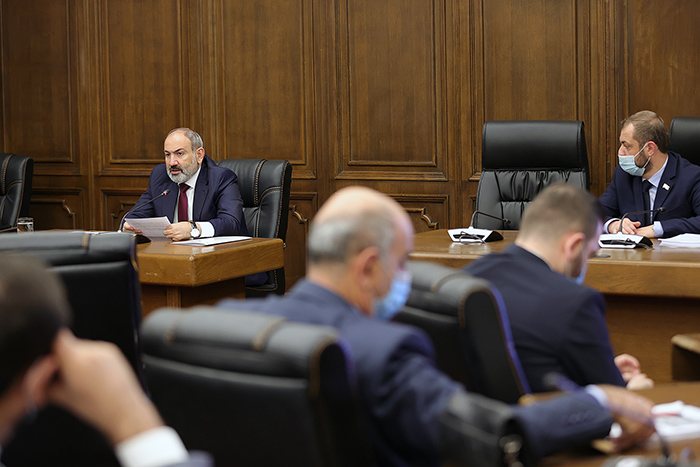
The 2022 state budget is based on three main priorities. Prime Minister Nikol Pashinyan said this during the discussion of the state budget draft in the National Assembly.
He listed what those priorities are.
“Improvement and reform of the security system, development of infrastructure, modernization of education and science. The 2022 defense budget is 11% higher than the previous year, amounting to 345 billion drams.”
Pashinyan emphasized that they will proceed consistently on the path of creating a professional army in Armenia: “We will do this with smooth, well-thought-out steps, increasing the attractiveness of military service and improving the image of the officer and officer service. In the new security environment, the defense of our country continues to remain the most important priority.
We have set the goal of increasingly carrying out the function of border protection through border guard troops each year, with the vision of having only border guard troops serve on our borders in the future. The withdrawal of Azerbaijani armed forces units from the territory of the Republic of Armenia, particularly from the Sotk-Khoznavar section, and the start of the delimitation and demarcation process between Armenia and Azerbaijan will create favorable conditions for the solution of this problem.”
Regarding the country’s defense strategy, Pashinyan noted.
“In the government’s program, we have already emphasized that the Republic of Armenia, like any peace-loving state, will develop and transform the Armed Forces not for aggression, but for protection from aggression. The Republic of Armenia has no intention of conquering territories. In terms of the development of the security system, it is important not only to modernize the army’s defensive capabilities, but also to form a favorable external environment around the Republic of Armenia, the consistent implementation of the agenda of opening an era of peaceful development for the Republic of Armenia, Artsakh and the region, which we see through overcoming the hostile atmosphere in the region, the resumption of the negotiation process in the format of the OSCE Minsk Group co-chairmanship for the settlement of the Nagorno-Karabakh conflict, and the unblocking of regional economic and transport infrastructures.
It should be emphasized that the unblocking of the region’s transport infrastructures can qualitatively change the content and structure of the RA economy, become an additional stimulus for the development of intra-Armenian infrastructures, ensure long-term inclusive economic growth, create equal conditions for RA citizens to engage in economic activity, and increase the economy’s attractiveness for investments.”