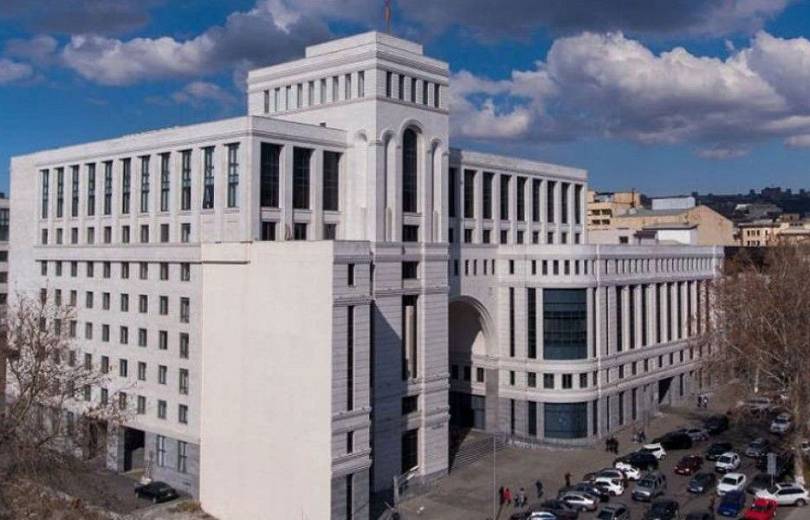
Anti-Armenianism and the threat of the use of force continue to be Azerbaijan’s state policy, “which obviously contradicts regional and international efforts aimed at having a peaceful, developing and stable region,” said a statement by Armenia’s Ministry of Foreign Affairs, on the occasion of the 34th anniversary of the pogroms of Armenians perpetrated in Sumgait.
“The organized mass killings and tortures of Armenians, which aimed to violently suppress the democratic expression of will of the Armenian population of Artsakh and the realization of its inalienable right to self-determination on the basis of existing legal mechanisms, subsequently continued in Baku, Kirovabad and other Armenian-populated settlements of Azerbaijan. To the loud expression of will of the people of Mountainous Karabakh to live freely and safely in their homeland, Azerbaijan responded by implementing a policy of collective punishment against Armenians, which later escalated into the unleashing of a large-scale war against the people of Mountainous Karabakh,” the statement of the foreign policy department noted.
“Today we join Armenians in mourning and paying tribute to the memory of those who fell victim in Sumgait in 1988,” the United States Embassy in Armenia wrote on its Facebook page.
The Ministry of Foreign Affairs also draws attention to the fact that on December 7 of last year, the decision of the UN International Court of Justice regarding the application of urgent measures within the framework of the International Convention on the Elimination of All Forms of Racial Discrimination showed that “more than three decades after the crime of Sumgait, Azerbaijan continues its policy of racial hatred against Armenians and the destruction of Armenian cultural heritage.”
Statements have recently been heard from Baku questioning the ownership of Armenian Apostolic churches in the territories that have come under their control, claiming that they are Albanian, and stating that “Armenians have left traces on monuments that must be cleaned.”