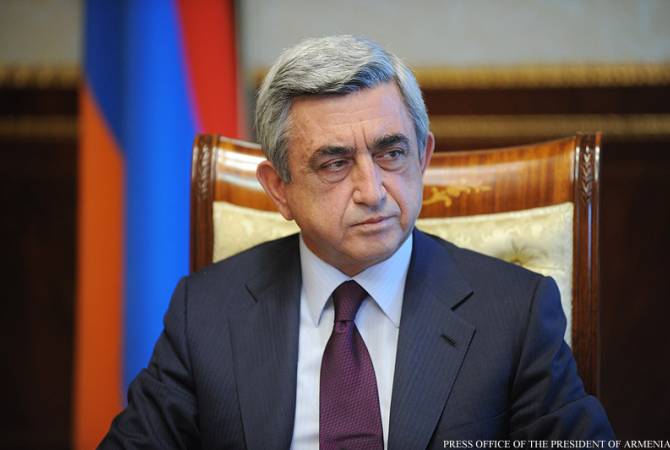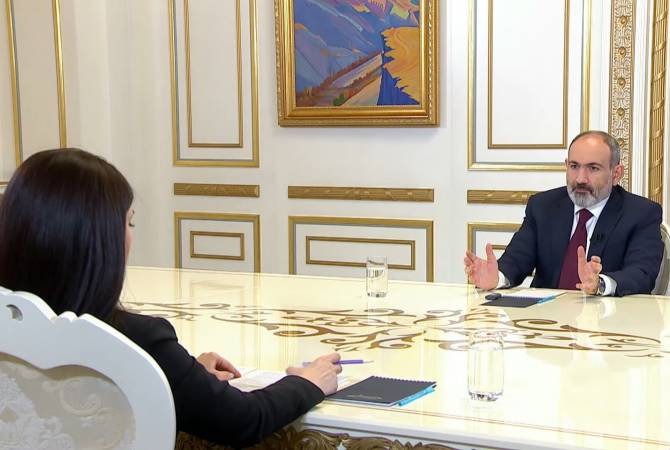
Prime Minister of Armenia Nikol Pashinyan, during an online press conference organised for representatives of the media and civil society organisations on 23 November, said, “Armenia will not consider the option of leaving the CSTO,” also noting that the CSTO is not only a multilateral but also a very important channel and platform for our strategic relations with Russia.
“As the presiding country, we must work so that the CSTO has proper participation in ensuring security in our region,” said Pashinyan.
At the same time, he noted that some of the CSTO countries signed a strategy with Turkey regarding the Turkic-speaking world, which is a reality that cannot fail to have an impact.
Referring to the process of delimitation and demarcation, including the proposals of the Russian Ministry of Defence, Nikol Pashinyan pointed out: “When we say mirror withdrawal, we mean, how do we imagine that during that process of delimitation and demarcation, should violations of the ceasefire regime and clashes continue? It is possible that Russia will put forward an idea that addresses our proposed issue, that during the process of delimitation and demarcation, military provocations must be excluded.”
Regarding the statement coming from various circles that a document will be signed during the trilateral meeting, the Prime Minister elaborated: “There is an impression that a paper is to be signed about the results of demarcation and delimitation, such a thing is not possible; the probable document to be signed will be about the following: that Armenia and Azerbaijan are forming a commission that begins to deal with delimitation and demarcation work. In that paper it will not be written that the border will pass here or there. That final formulation will take place on the basis of the work of that commission.”
According to Pashinyan’s unverified data, on 16 November 32 people were taken captive. According to unverified information, the 24 servicemen whose contact was interrupted during the border tension of 16 November have been taken captive: “According to unverified data, a larger number of soldiers have been taken captive; some of those we thought had been killed have been taken captive. We have 24 plus 8 captives, but again, these data need final clarification.”
To the question of whether, when the Azerbaijani side, using the expression “unimpeded movement” of the 9 November statement, has insisted that this means a “sovereign corridor,” whether it is acceptable for the Armenian side to provide the Azerbaijani side with a road without customs or other checks, Prime Minister Pashinyan replied: “There is a simple universal logic — if it meant a sovereign corridor, it would have been written as a sovereign corridor. Especially since in that same document the word corridor is used — in the formulation of the Lachin corridor.”
He also stated that at the working level “we have never heard the expression corridor from Azerbaijan.” At the same time, he continued: “In the trilateral working group it has been recorded that it does not exist; first, there is the question of sovereignty. Second, why should what does not exist be acceptable to us; why should we discuss it at all? This is where Azerbaijan’s blackmail policy is. They have named it the ‘Zangezur corridor’ and say, if you do not give it, we will obtain that corridor by war.”
“There will be no such thing, but on the other hand, Armenia is interested in the restoration of railway and road connections. Yes, Azerbaijan must receive a road; in this case, it is not about Nakhichevan, it is about the Turkey-Azerbaijan connection; I hope I am understood correctly — Armenia also has an interest there,” declared the Prime Minister of Armenia, adding: “Today they say they are giving a corridor, they are giving Syunik; dear people, forgive me, if there were such a giving government in Armenia, those shots would not have been fired; what meaning would those shots have; that aggression against our government would not exist,” he said, assuring that the executive he leads is trying in every way to protect Armenia’s interests.
There was an idea for the leaders of Russia, Armenia and Azerbaijan to hold an online trilateral meeting on 9 November, Pashinyan informed, also noting: “I have said that the idea of that meeting is discussable for us and is problematic.” Nevertheless, as he noted, he thought that if as a result of that meeting any urgent issue, for example the issue of the return of captives, could be resolved, he was ready to meet; however, that meeting did not take place; it will take place on 26 November in Sochi.
Armenia may be more interested in the opening of regional communications, declared Nikol Pashinyan, adding that Azerbaijan is developing the “corridor logic” in order to remove that topic {regional communications} from the agenda.
He insists that Azerbaijan has adopted a continuous aggressive policy towards the Republic of Armenia, which should be the focus of discussion of the international community: “Azerbaijan is clearly showing territorial aspirations towards Armenia. What does, for example, ‘Zangezur corridor,’ ‘Eastern Zangezur,’ ‘corridor logic’ mean? Who are those who have declared those terms? We have stated before and we state now that we have not discussed, do not discuss and will not discuss the issue with corridor logic, which does not mean that we are in any way renouncing the agenda of opening regional communications.”
The Prime Minister of Armenia believes that expectations of quick results from meetings with the Azerbaijani side should not be formed.
“I do not think it is right to form expectations from every specific meeting — whether negative or positive; expectations of some quick results should not be formed. There is tension in our region, and to overcome that tension we must negotiate,” declared Nikol Pashinyan.
According to the Prime Minister, one of the issues to be discussed at the meeting with the President of Azerbaijan in Brussels on 15 December will probably be the humanitarian issue, including the issue of captives; he noted that a general substantive discussion will also take place.
“Our perception is, and it also follows from the general situation, that I believe the contacts between the representatives of Armenia and Azerbaijan should be more frequent, so that we can regulate situations, find solutions and try to avoid crises,” stressed Pashinyan.