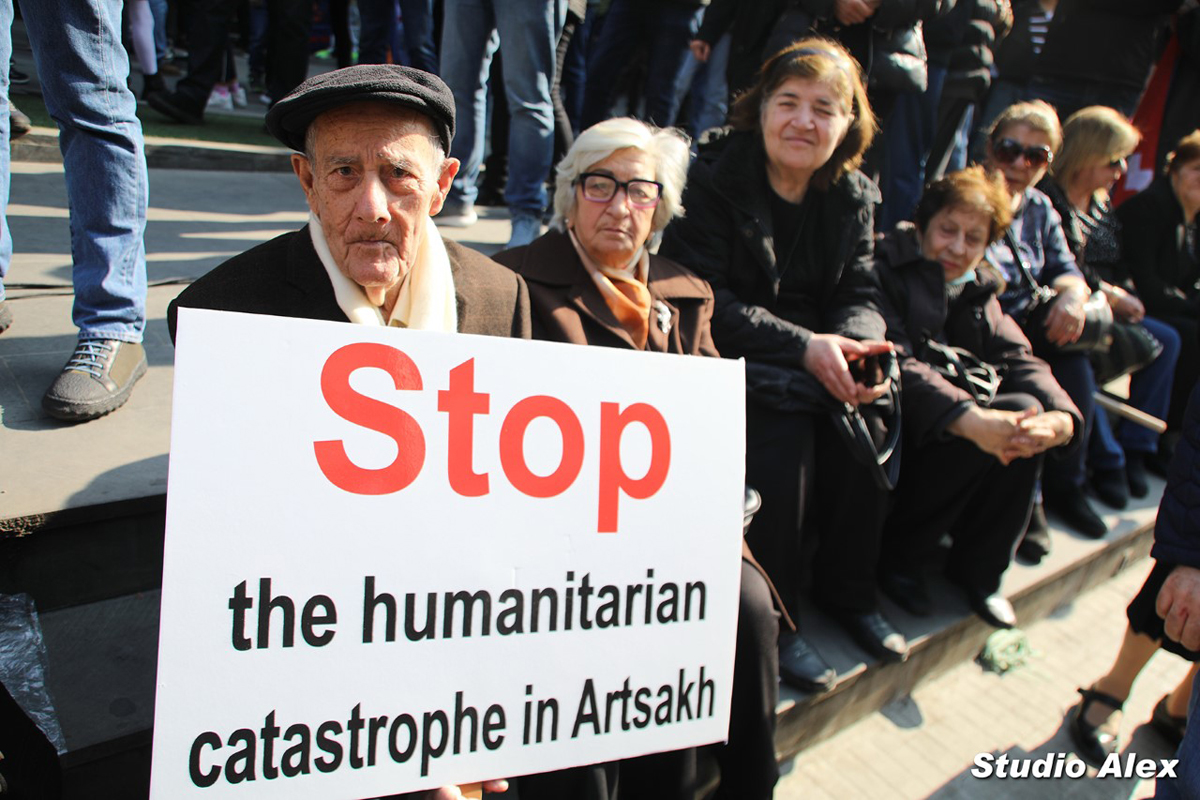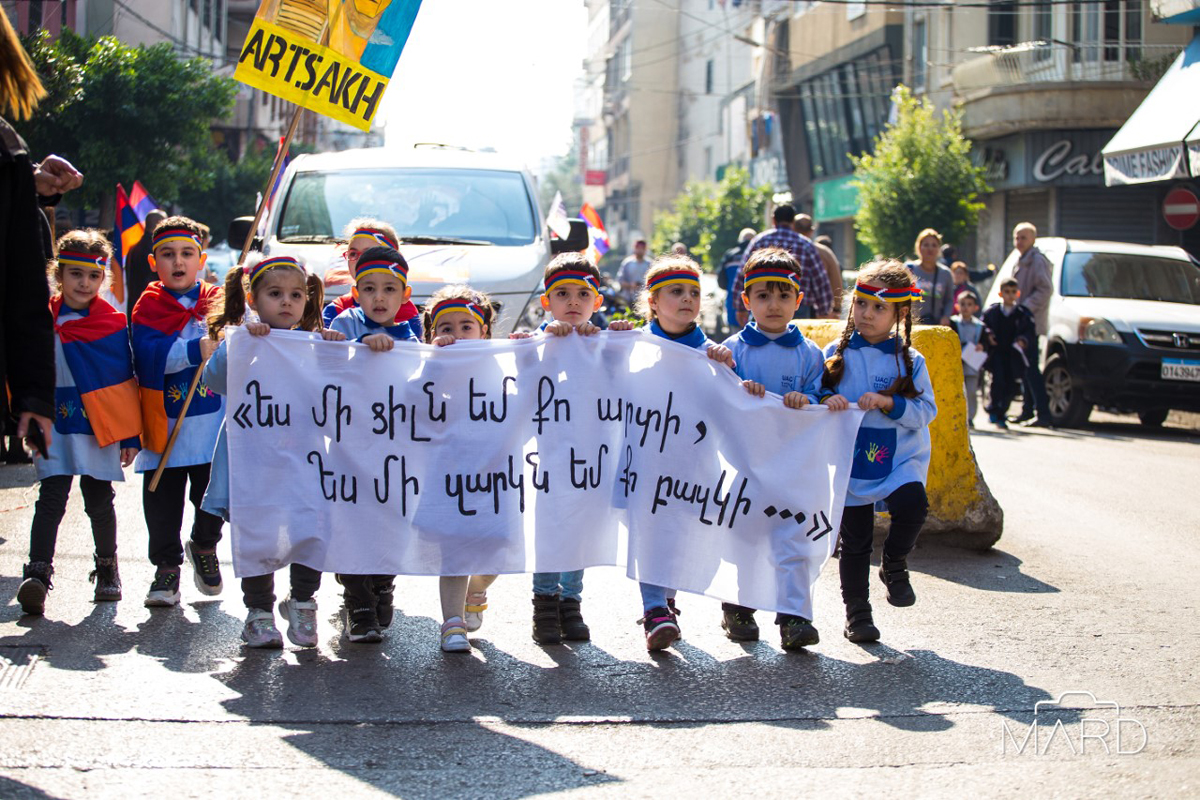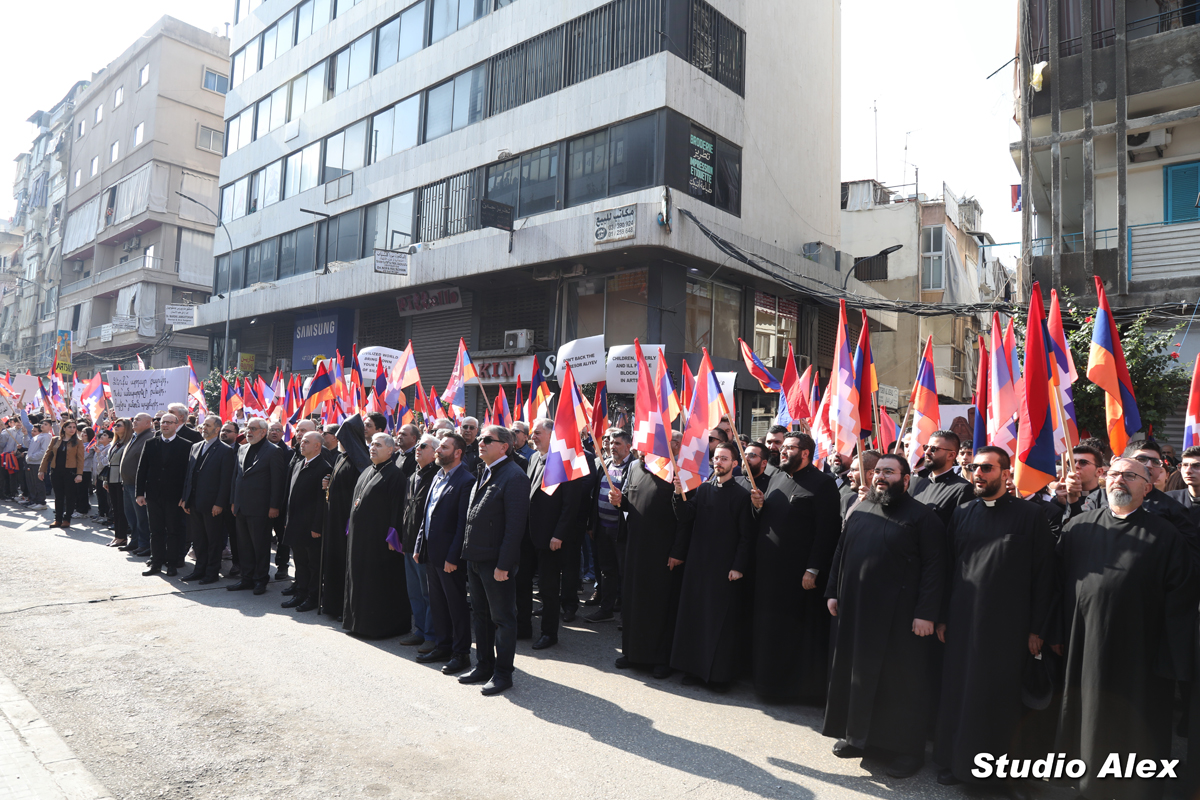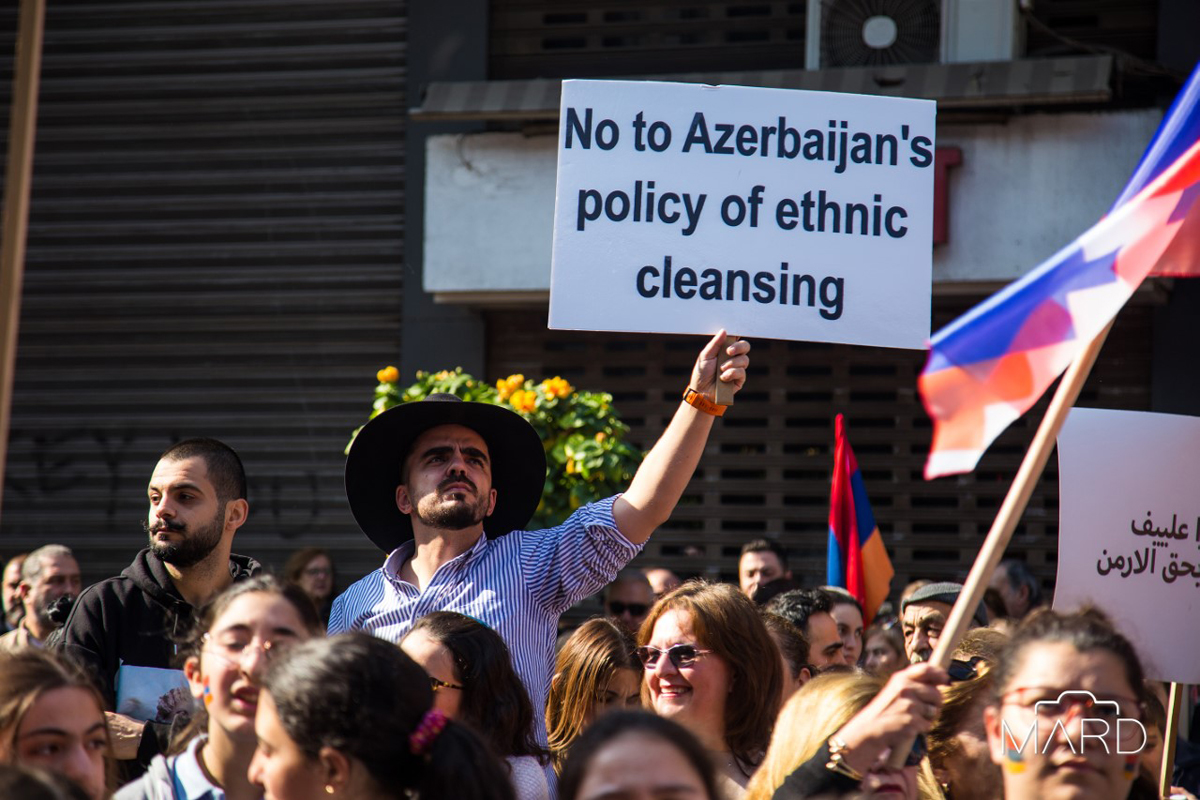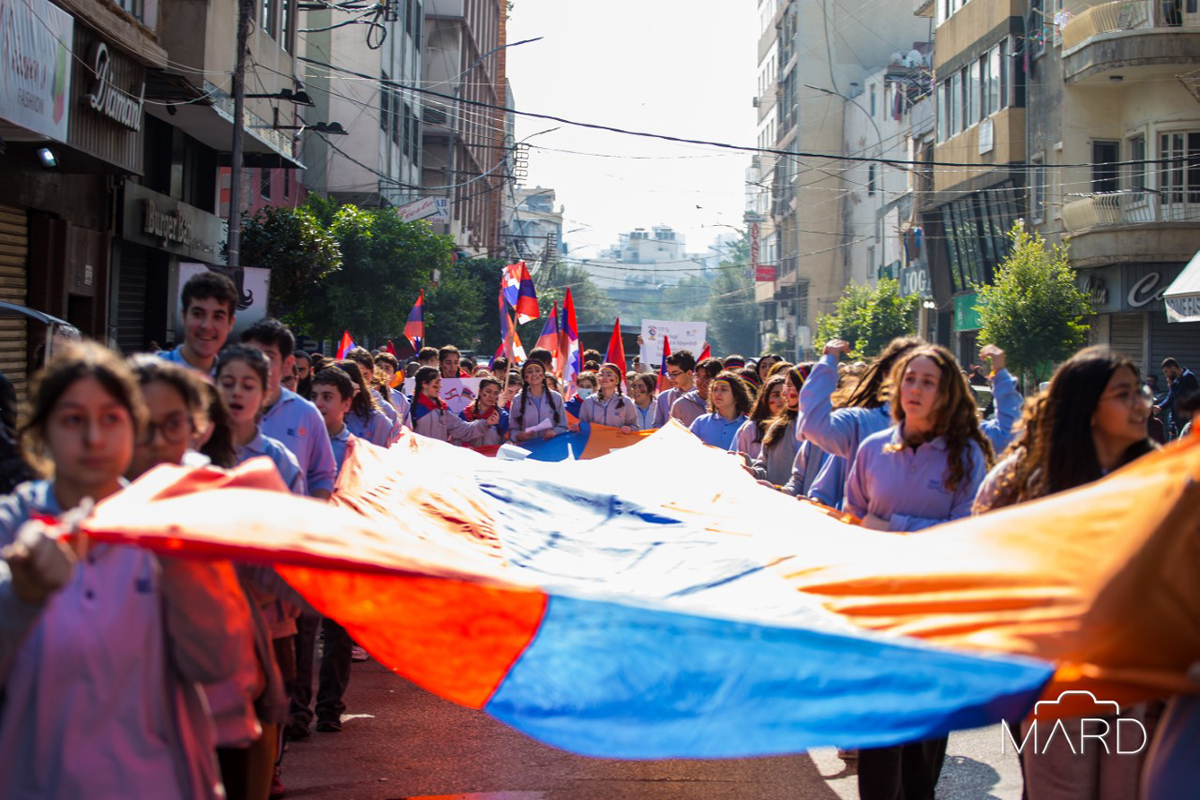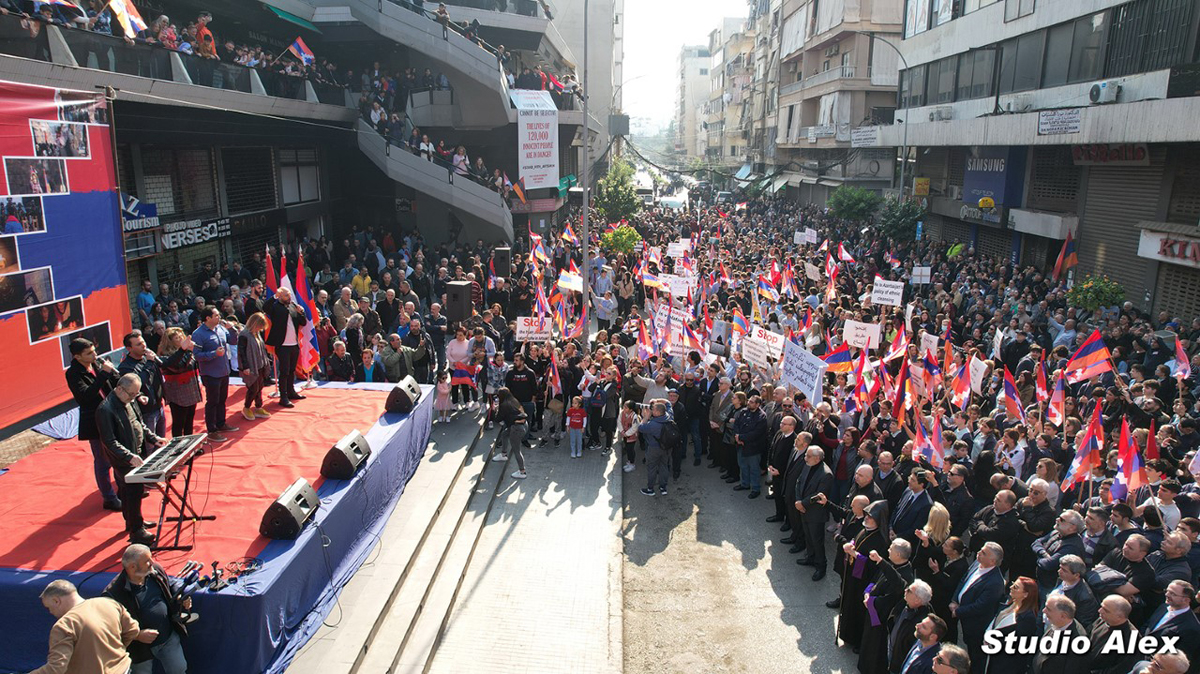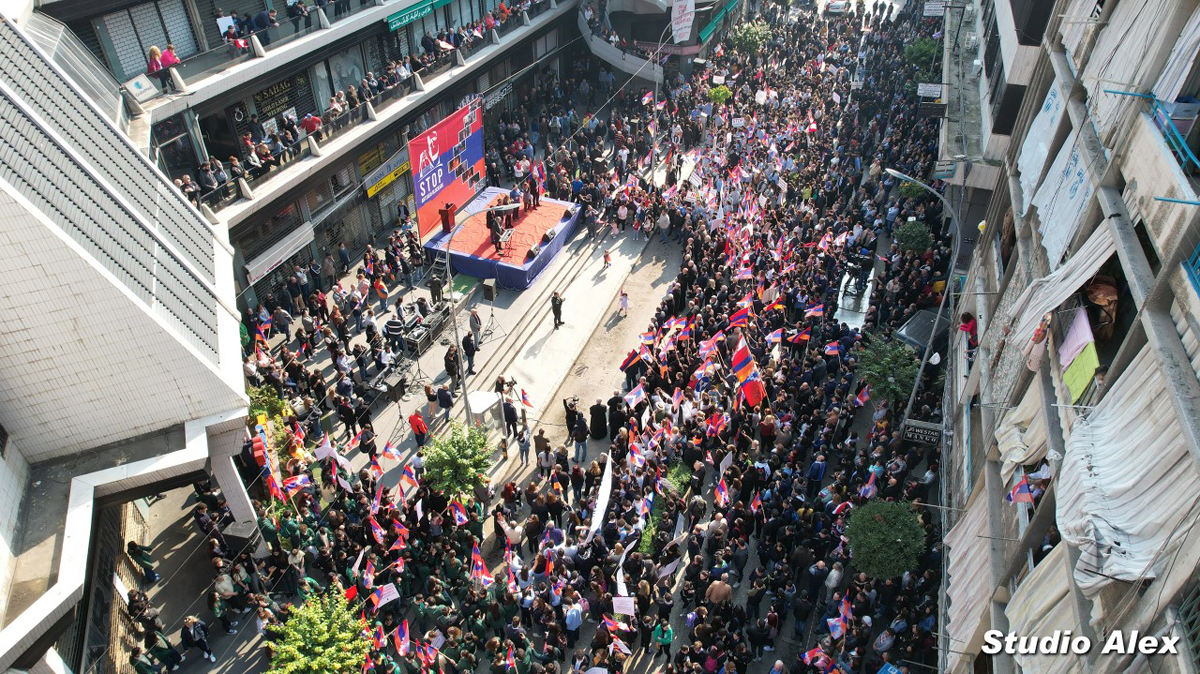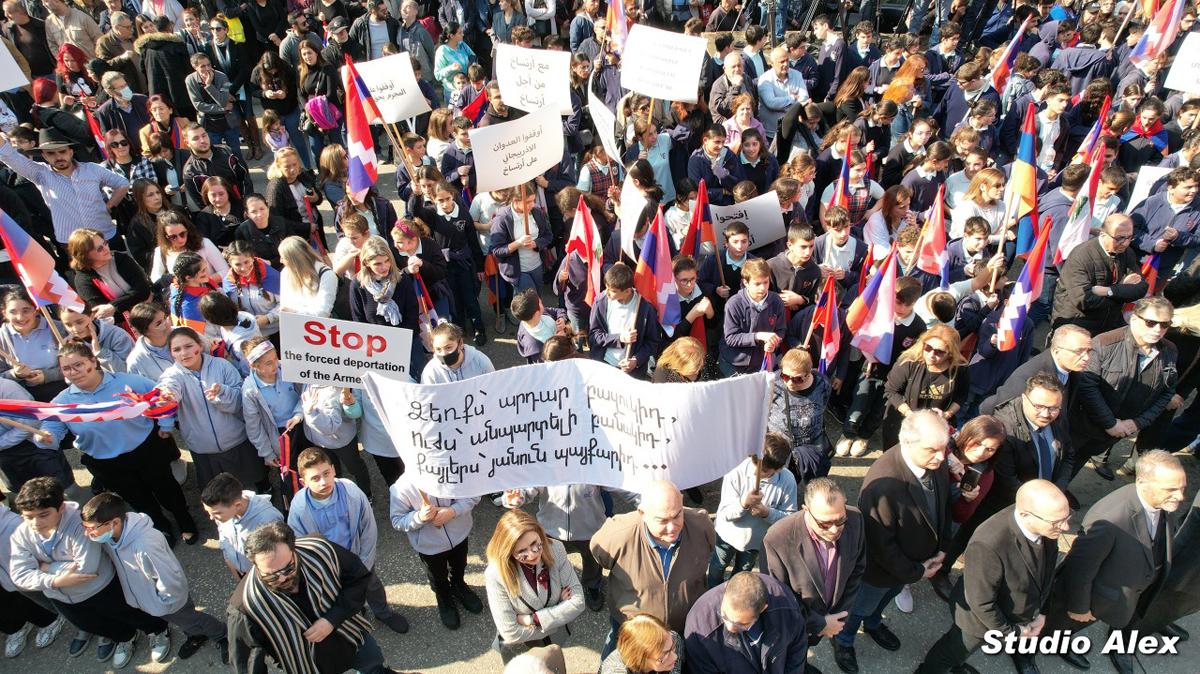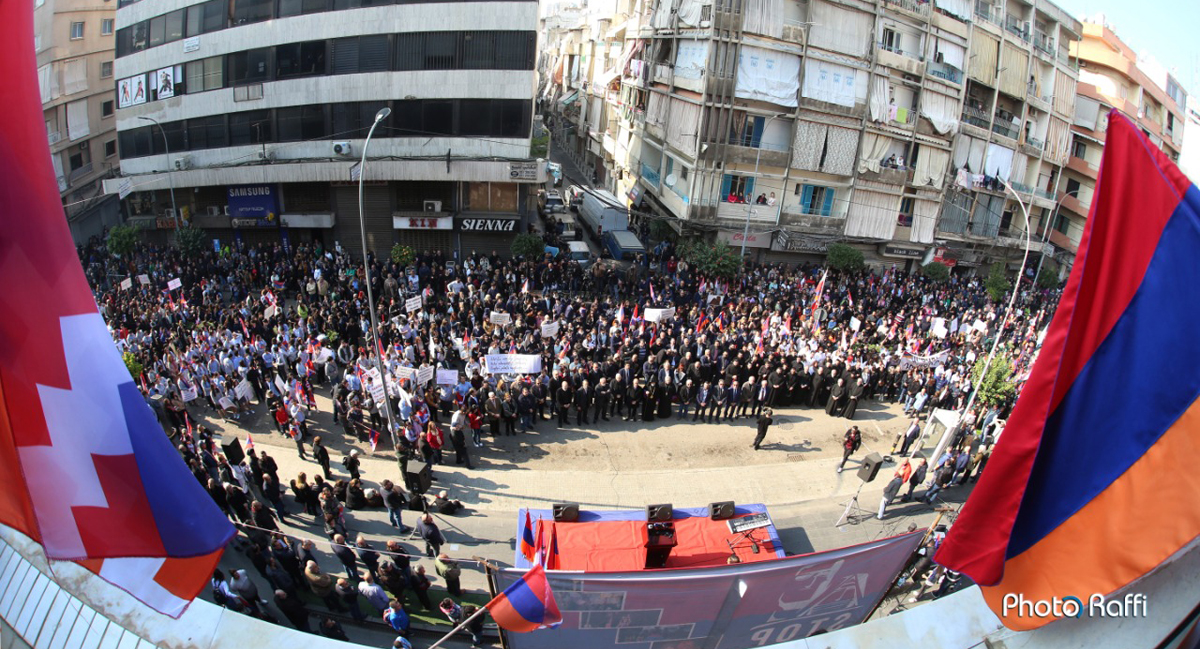
With slogans such as “Artsakh is ours,” “We are Artsakh,” and “Long live the Armenians of Artsakh,” all segments of the Lebanese Armenian community yesterday — Wednesday, 25 January 2023, at 12:00 noon — expressed their solidarity and support from in front of the “Aren” center in Bourj Hammoud, the heart of the Armenian community, for the Armenians of Artsakh, who have now been under blockade for 45 days, facing daily, humanitarian, health, heating, food, medicine and numerous difficulties, yet still fighting and clinging to their land.
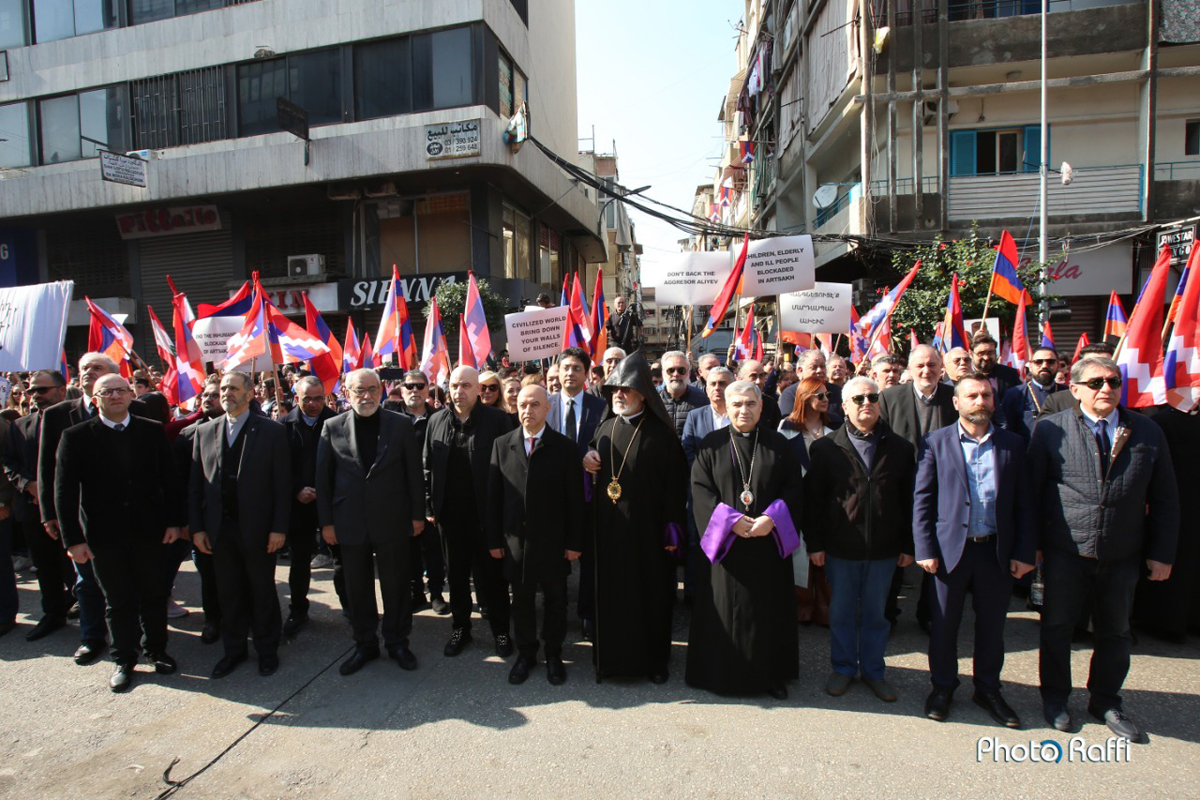 At the rally organized by the Social Democrat Hunchakian Party, the Armenian Revolutionary Federation and the Armenian Democratic Liberal Party, against the Armenophobic campaign waged by Azerbaijan and in support of Artsakh, Lebanese Armenians, among whom students were a dominant presence, affirmed through their raised demand-bearing placards and nationally resonant slogans that the Armenian character of Artsakh is non-negotiable, that the opening of the Berdzor corridor — the only passage connecting Artsakh to Armenia and the world — is imperative, and that the international community must take steps to prevent a new ethnic massacre in Artsakh, emphasizing that every Lebanese Armenian stands by the side of the Artsakhtsi, who lives in deprivation but has not lost his vigor and faith.
On this occasion, all the shops and establishments of Bourj Hammoud had closed their doors and responded to the call of the three Armenian political parties to take part in the rally.
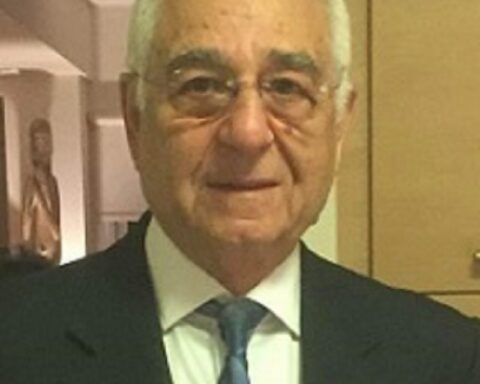
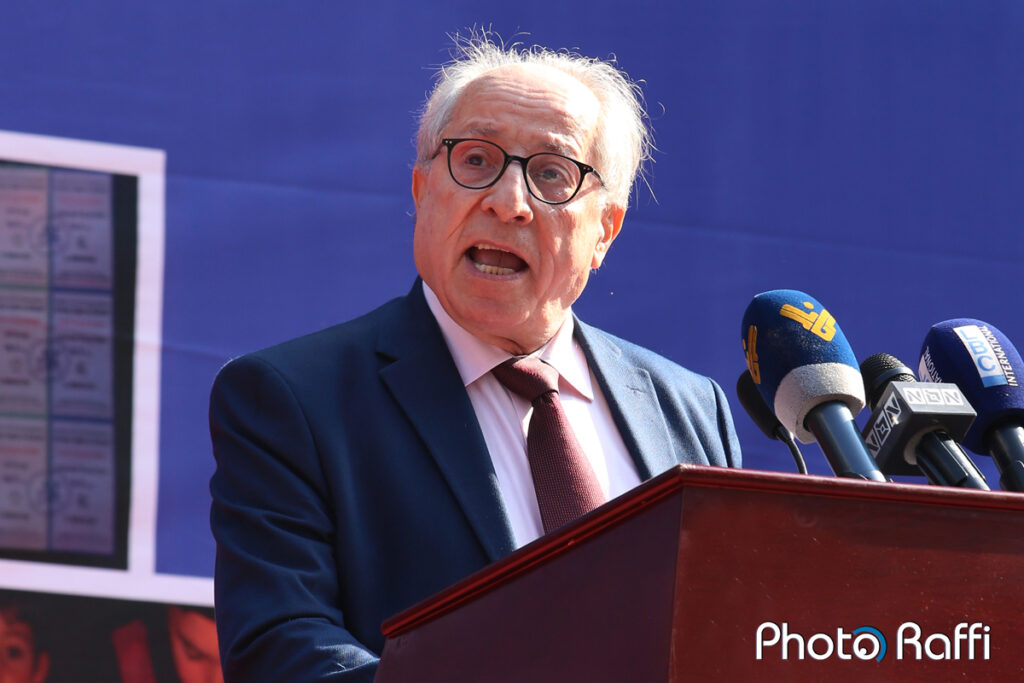
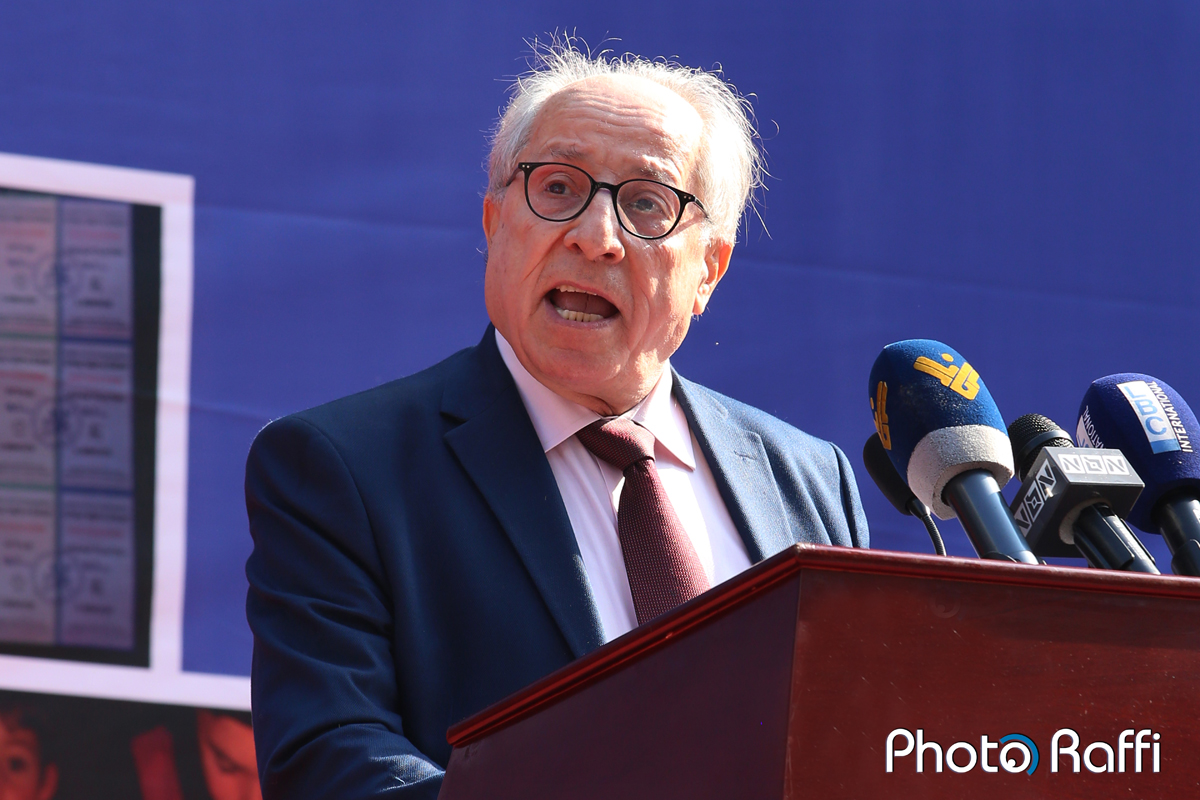 After the anthems of Lebanon, Armenia and Artsakh, Krikor Manoukian delivered the ADL’s address, noting that the enemy, which unleashed war against Artsakh but failed to empty it of Armenians, is now trying to exert psychological pressure on the Armenians of Artsakh with the aim of emptying it of its native, true owners. He said that the inviolability of the homeland’s borders is non-negotiable and uncompromising. Noting that the Artsakh crisis is gradually turning into a deadly catastrophe, K. Manoukian stated that the people of Artsakh have given their heroic decision to firmly maintain their statehood and live in dignified peace, therefore Artsakh cannot be part of Azerbaijan. He stressed that the Artsakh crisis must be resolved on the basis of the international principle of the right of peoples to self-determination; states that pursue a policy of double standards, which founded the states of Kosovo, South Sudan and East Timor, can easily accept Artsakh’s right to independent existence. Krikor Manoukian affirmed that the stage of words has passed; action is needed, because otherwise it will be too late, noting that Russia, as a great friend of the people of Artsakh, has an important role in this direction.
“The Armenians of Artsakh today are again living through a sad, uncertain and dangerous phase of life. Today they are living this phase also on our behalf, because Artsakh, as a native land, belongs not only to the Armenians of Artsakh, but also to the entire Armenian nation, and the entire Armenian nation has there not only the rights and possessions of an owner, but equally duties and obligations. Today too, the Lebanese Armenian community, as in the past, is again ready to continue its struggle in the name of the just struggle of Artsakh and the Armenians of Artsakh,” said K. Manoukian and stressed that today the Lebanese Armenian and every Armenian will remain ready and committed to contributing their share to the life of Artsakh and the Armenians of Artsakh, for the salvation and well-being of that noble people.
Concluding his speech, Krikor Manoukian stressed that the united Lebanese Armenian community will not accept that the enemy continues its inhuman, monstrous program, but will cry out under the ears of a world that feigns deafness, until a crack appears in that wall of silence, and justice prevails.
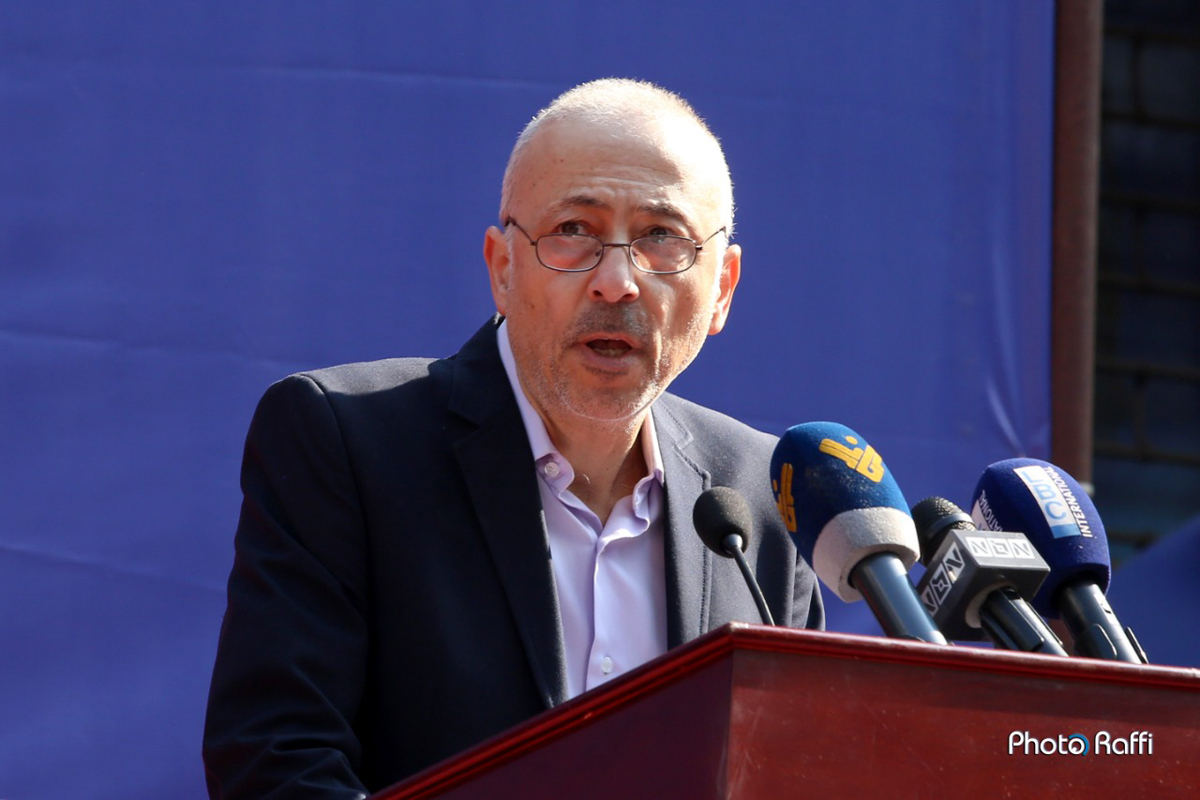 Loutfik Ayvazian delivered the ARF’s address, whose speech we present below.
If we look at a map of the world and focus on the vast region located between Central Asia and Morocco, starting from Kazakhstan, Uzbekistan, Afghanistan and passing through the countries of the Middle East, and continuing to Morocco and Mauritania, we will find around 40 countries.
Only two of them have national flags that do not bear communal, religious or tribal symbols.
Those countries are Lebanon and Armenia.
For many decades and thousands of years, our forefathers have undertaken to transform Lebanon and Armenia into beacons of light, solidarity and openness toward others.
Today these two countries are surrounded by dangers threatening their existence, and this reality has various causes.
We call on the international community not to allow these two countries to collapse, because they are countries of a human and civilizational message.
And if we look at the same map, we will see two cancerous formations that have no clear borders and brazenly penetrate our region. They are the Zionist formation, which holds Arab lands occupied, dreaming of a state of Israel stretching from the Euphrates to the Nile.
The Israeli formation cooperates with the enemies of Egypt to deprive Egyptians of the waters of the Nile.
The second formation is Turkey, which holds Kurdish, Arab, Armenian and Cypriot lands occupied, killing their owners and inhabitants, dreaming of reconstituting the Ottoman Empire.
The Turkish formation is complicit in depriving Syrians and Iraqis of the waters of the Euphrates.
These two cancerous formations are nourished by a third one resembling them, which is the Azerbaijani formation in the Caucasus.
This artificial state suddenly appeared in 1918, following the collapse of imperial Russia and by Turkish-Soviet agreement.
This fabricated country continues in the Caucasus to do what Turkey did in Western Armenia and Cilicia during the First World War, when it subjected the true inhabitants of those two regions — the Armenians — to genocide.
In 1991, after the collapse of the Soviet Union and the independence of Armenia and Artsakh, as well as all the republics that were part of the Soviet Union, Tatar marauder bands, who are the inhabitants of Azerbaijan, attacked the Republic of Artsakh, declaring themselves its owners, and also attempted to subject its people to genocide, but were defeated in the face of the sacrifices of the heroes of Karabakh.
After Azerbaijan’s defeat, the 1994 ceasefire was signed and the independence of Artsakh was established, and a security belt was placed around it, which, however, was not sufficiently wide.
Since that date, Azerbaijan not only failed to digest the independence of the Republic of Artsakh, but also persistently sought opportunities to organize conspiracies and re-occupy Artsakh and empty it of Armenians.
Azerbaijan’s conspiratorial plans were facilitated by Baku’s oil and gas pipelines, as well as its enormous material resources, which facilitated the signing of huge arms purchase agreements by Azerbaijan, especially with Turkey and Israel.
Azerbaijan’s material resources also helped it “polish” its image at international conferences through the bribes it distributed, which is known as caviar diplomacy.
Azerbaijan’s brazenness reached the point where it demanded lands from the republics of Armenia and Iran, and also demanded that arms manufacturing companies conduct live tests on Armenian soldiers. These demands were not taken seriously, until on 27 September 2020 Azerbaijan launched a large-scale attack against Armenia and Artsakh, trusting in foreign mercenaries doing the fighting. A large-scale military operation that was recognized as the 44-day war and whose outcome was tragic for Armenia and Artsakh.
Because of the war, the security belt was shattered and three-quarters of Artsakh’s territory, as well as several regions of Armenia, were occupied. More than 4,000 Armenian martyrs were recorded, and the infamous 9 November agreement was signed, within the framework of which Russian peacekeeping forces were deployed in the region.
Even this agreement, which protects Azerbaijan’s interests, was not respected by the authorities in Baku. Azerbaijan’s authorities executed dozens of Armenian soldiers by death, while dozens of others remain captive and are held in Azerbaijani prisons.
Azerbaijan’s army continues to penetrate into Armenia and, with Turkish support, is trying to extort new concessions.
Exploiting Russia’s involvement in the war against Ukraine, Azerbaijan spares no effort to open the Turanian corridor, which connects Turkey to Azerbaijan using Armenian lands.
To this end, since 12 December 2022 Azerbaijan has kept Artsakh and the 120,000 Artsakhtsis living there under blockade.
With the blockade of Artsakh, it has become impossible to deliver food, gas and medicine to the Artsakhtsis.
Azerbaijanis also commit terrorist acts against Artsakh youths and the unarmed population, creating an inhuman chaos that recalls the 1915 Armenian Genocide.
Azerbaijan continues this criminal course, ignoring the opening of the passage in Berdzor, the Road of Life between Armenia and Artsakh.
It has already been a month and a half that the Artsakhtsis have been enduring these inhuman conditions.
The purpose of our rally today is to condemn the criminal blockade of Artsakh by Azerbaijan and Turkey and to affirm our solidarity with Artsakh and the Artsakhtsis, as well as with Armenia’s border regions.
We call on the international community and international organizations to immediately take the necessary measures and compel Azerbaijan to end the unjust blockade of free Artsakh.
Artsakh’s future is indisputable; its future is independence and the right to national self-determination. This is our vow to all the martyrs and the heroes who fought for this sacred right.
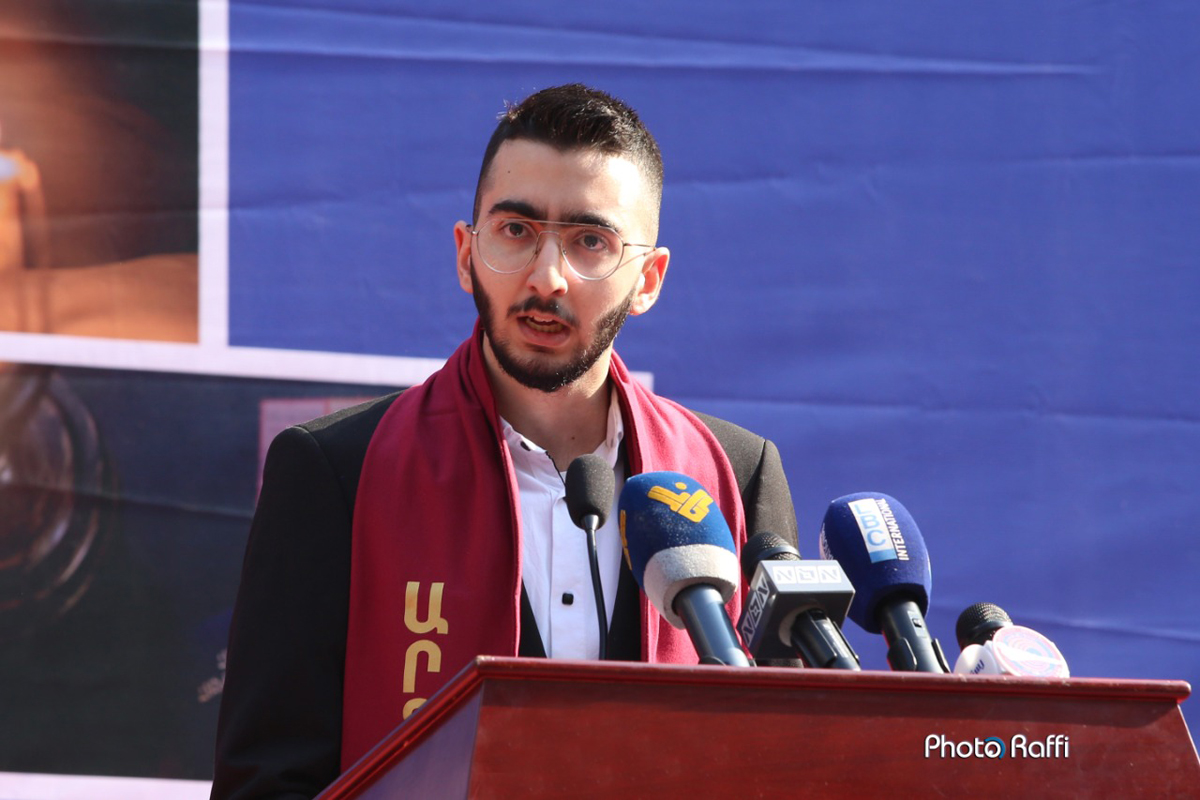 Nareg Gharibian delivered the SDHP’s address, referring to the blockade of Artsakh by those who call themselves “environmentalists,” who in reality have no connection to nature or its protection, but are very clearly Baku’s political agents, who for 45 days have kept the Berdzor corridor closed, placing the Armenians of Artsakh face to face with the threat of a new genocide.
Referring to the 44-day war, which Azerbaijan unleashed with Turkey’s direct intervention and participation, he said that the Armenian nation, to its sorrow, lost that battle and suffered territorial and human losses, but the Erdogan regime, not satisfied with territorial advantage, continues to provide unlimited support to Azerbaijan to pressure Armenia and the entire Armenian people, trying to resolve several strategic issues for themselves. Nareg Gharibian summarized these issues in 3 main points, the first of which was to force the Armenian authorities to cede to Azerbaijan a corridor passing through Syunik, opposite the Berdzor corridor, which would primarily serve to connect Turkey to Azerbaijan, and then to the Turkic-speaking states of Central Asia, thus realizing the centuries-old pan-Turanian dream. Second, Turkey would try to pressure Armenia and the Armenian nation so that they renounce the struggle for their claims, thus freeing itself from the burden and consequences of the crime committed by its ancestors, and third, to weaken the Armenia-Artsakh-Diaspora unity, to weaken our people’s resistance and to seize our national will.
Proceeding from all this, Nareg Gharibian noted that today the Armenian nation finds itself at a fateful turning point similar to the developments of the beginning of the last century, when again the Armenian nation was alone, and the enemy threatened to destroy all of Armenia.
“It is true that today we have gathered to express solidarity with and embrace the Armenians of Artsakh, but at the same time we, as noble Lebanese, have gathered to fulfill our civic duty toward the Lebanese homeland and to protect it from the danger of the Zionist-Turanian alliance,” he said, noting that together with our Lebanese brothers and sisters we will protect Lebanon from the dangers of this chauvinistic and expansionist program.
At the end of his speech, he stressed that this is not a moment to be occupied with narrow internal calculations, but a moment of maximum unity, mutual concession and trust, because we are all on the same ship, and if the ship sinks, we will all suffer severely, and if it is saved, we will all win. “Let this rally be a vow of unity and the starting point of future victories. One fist, one people, one Armenian nation. Long live the Diaspora-Armenia-Artsakh unity,” concluded Nareg Gharibian.
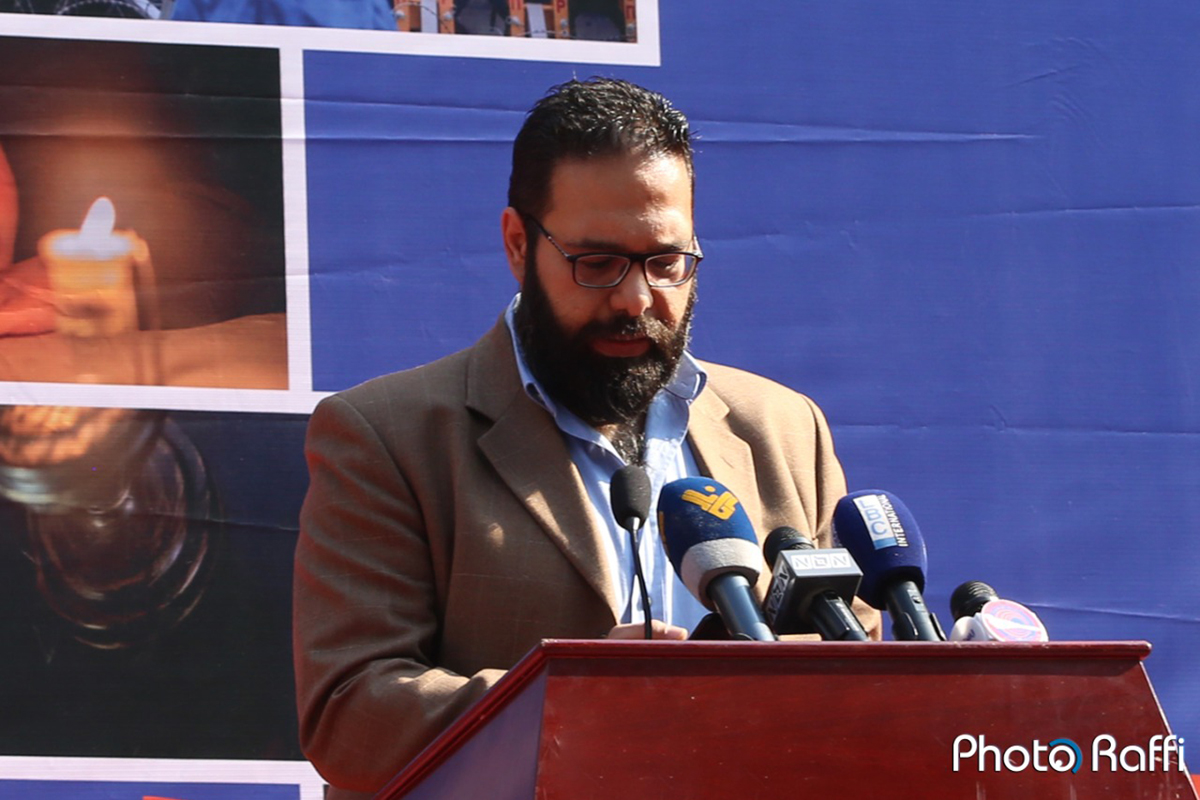 Then Krikor Ekmekdjian, administrative director of the Azgayin Miatsyal Varzharan, read the statement issued by Lebanon’s Ministry of Foreign Affairs through the efforts of the Armenian parliamentary bloc, concerning the Berdzor corridor.
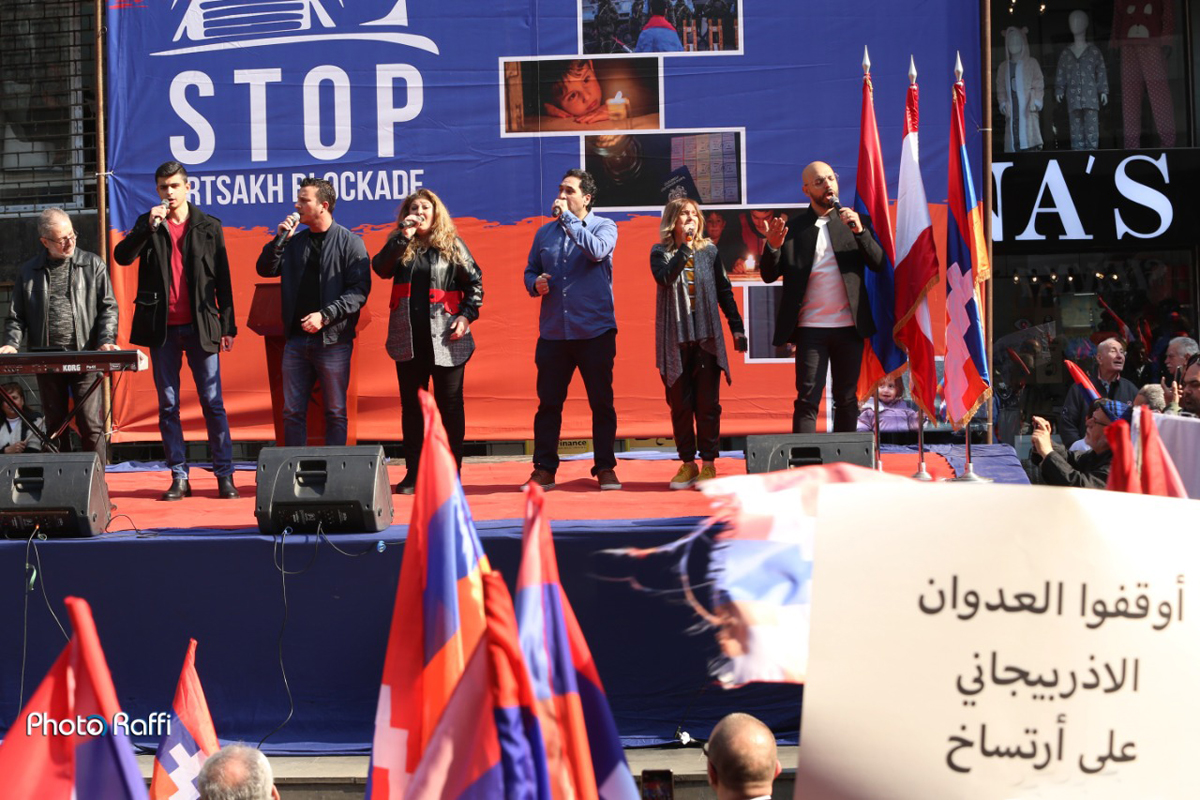 At the end, a group of Lebanese Armenian singers performed the song “Armenians Unite” and the victory anthem “Sardarapat.”