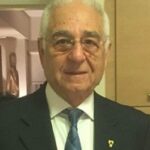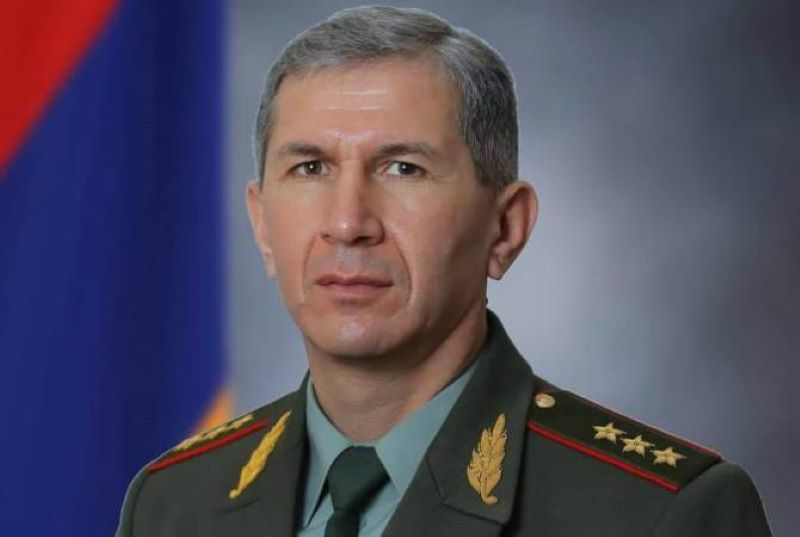
The Chief of the General Staff of the Armed Forces of Armenia, Gen. Onnik Gasparyan, has published a message, which we present in abbreviated form below.
“Dear compatriots, fellow soldiers. The war unleashed on 27 September 2020 by Azerbaijan, its ally Turkey and the involved mercenary-terrorists was met by the Armenian armed forces with honour, and from the very first moments of the war they did everything possible and impossible that depended on them. The Armenian soldier fought selflessly, gave a life-and-death struggle.
Accusations are being voiced by certain figures that the leadership of the armed forces presented the head of state with an unrealistic analysis of the likely nature of the enemy’s actions and the capabilities of its armed forces. This does not correspond to reality.
On the basis of the analysis carried out, I presented proposals aimed at raising the level of the state’s military security. In particular, I noted that:
1. Our adversary is no longer only Azerbaijan, but also Turkey. Consequently, Armenia cannot effectively withstand the combined military potential of those states, and it is necessary to direct the entire political and diplomatic potential toward avoiding war or at least postponing it.
2. The proposal was accepted by the Security Council and the Prime Minister, but the question was raised: ‘And if we fail to avoid war, what should we do?’ I replied that in a war imposed on us, we must try to inflict heavy losses on the enemy in the shortest possible time and force it to abandon further operations. I noted that we must avoid a protracted war, taking into account the availability of our resources. Numerous proposals were discussed and approved, the implementation of which should have significantly raised our combat potential; this concerned both the acquisition of armaments and military equipment, and the comprehensive support of combat operations.
3. At that time, the question of forming militia units with a strength of one hundred thousand was also raised.
In any case, we could not avoid war, and on 27 September the enemy, with forces many times superior, launched a large-scale offensive along the entire front of Artsakh. The Defence Army successfully repelled all its attacks, inflicting heavy losses, destroying large numbers of manpower and military equipment. Unfortunately, our forces also suffered heavy losses.
On the fourth day of the war, at a meeting of the Security Council, I presented our losses and the armed forces’ assessment of the situation created, noting that within two or three days measures must be taken to stop the war; otherwise, with combat operations conducted at this intensity, our resources would be exhausted in a short time, and with each passing day we would have less favourable conditions for the negotiation process.
I presented similar assessments on numerous occasions also during round-the-clock work with the Prime Minister, as well as at meetings of the Security Council.
All attempts and proposals to stop the war at a certain stage were rejected by Turkey and Azerbaijan, and we were forced to continue combat operations, trying to inflict heavy losses on the enemy and force it to sit at the negotiating table.
The agreement was accepted under conditions very difficult for all of us, as a result of a genuinely comprehensive assessment of the situation. We had to make a choice between the very bad and the tragic. We chose the very bad.
That day was the worst day of my life, a personal tragedy for me…”