A brief overview.-
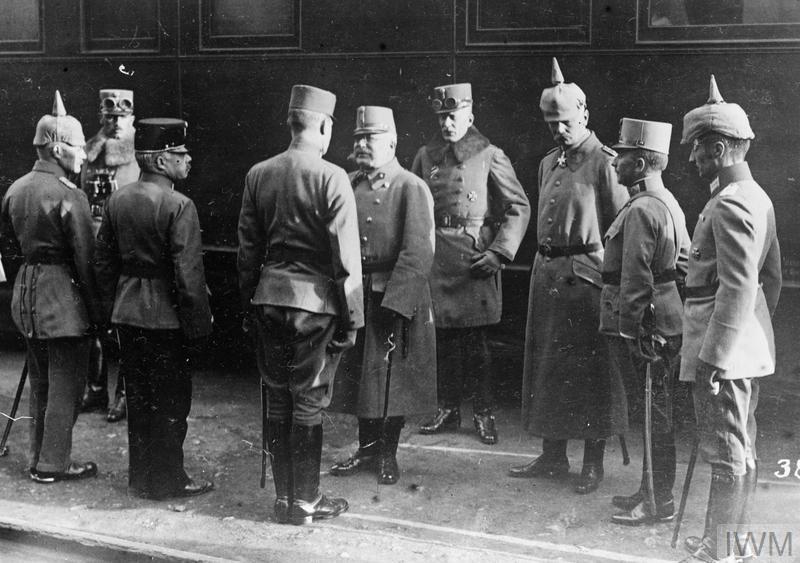
In 1915, Turkish regular forces and the gendarmerie participated in nearly all operations of the systematic genocide of more than 1.5 million Armenians. German officers, who were part of the Turkish-Ottoman general staff, actively participated in individual massacre operations. The attackers were mainly armed with Mauser-type rifles or carbines, and the officers with Mauser pistols, all produced at the Mauser factory in Oberndorf on the Neckar.
Krupp cannons from the city of Essen were also deployed by the hundreds, as for example during the assault on Musa Dagh, which had been occupied by Armenians. Exported German weapons provided the material foundations of the genocide, while German officers gave ideological support to the perpetrators of the Armenian Genocide.
Period.-
From 1895 to 1916.
Arms supply.- The slaughter of Armenians, organized by the state and carried out by Turkish soldiers and the gendarmerie, proceeded with the knowledge and consent of the highest German governmental circles. German officers served in the Turkish general staff and occupied command positions in Turkish regiments, divisions and armies, which were mainly armed with weapons and carbines produced by the arms manufacturers of the Mauser factory in Oberndorf, as well as with cannons produced by the Krupp company of Essen.
In February 1887, the Ministry of War of the Ottoman Empire and a German consortium, consisting of Mauser and Ludwig Loewe und Co KG, signed a contract according to which 500,000 rifles of the M/87 type and 50,000 carbines of the same type were to be supplied. That quantity of weapons and carbines was delivered to the Turks by the end of 1893.
In the same year, another order was placed, to supply 200,000 carbines of the M/93 type, whose magazine held 10 cartridges. These carbines were delivered by the end of 1896.
In 1903, a third large order followed, comprising another 200,000 rifles of the most modern type, the M/1903. More than two-thirds of the soldiers of the Ottoman army and the paramilitary gendarmerie were armed with Mauser weapons. Cannons brought from Germany were also in high demand in the Ottoman army. Between 1861 and 1912, the Krupp company of Essen succeeded in eliminating all French, British and American competitors from the field. Krupp, taking advantage of its good connections with Wilhelm II and the Sultan’s palace, received an order worth 226 million Reichsmarks, with which it organized the production of field cannons and artillery pieces.
Krupp cannons were used by the Turkish state both during the Balkan War, the Russo-Turkish War and the First World War, and were also deployed by the hundreds against self-defending Armenian freedom fighters.
From 1885 to 1912, Krupp sent the Ottoman Empire hundreds of L20, L24, L27 field cannons, as well as L30 and L50 types of 7.5 and 8.7 cm calibre, L35 and KL35 types of 24 and 35 cm calibre for coastal combat operations, and L6.3 and L6.4 types of 12 and 21 cm calibre mortars. To this is added the armour-plating of warships.
Human rights violations.-
Organized killing by shooting, hanging and beheading, as well as death by starvation and dehydration, and the refusal to provide humanitarian aid to those facing death. Such a systematic genocide as that of the Armenians, which was ordered by the highest administrative leadership of the Sultan and was carried out or tolerated by army commanders and the gendarmerie, had never before occurred on such a scale in the history of civilized humanity.
Perpetrators.-
On the German side.- Kaiser Wilhelm II of Prussia, Imperial Chancellor Theobald von Bethmann Hollweg, Generalfeldmarschall Freiherr Colmar von der Goltz, who from 1883 was a military adviser to the Ottoman Palace and was a principal accomplice in the genocide perpetrated against the Armenian people by the Young Turks, and Paul Mauser, designer of German weapons and politician.
Perpetrators on the Turkish side.- Sultan Abdul Hamid II, Sultan Mehmed V, Minister of War Enver Pasha, Minister of the Interior and head of the gendarmerie Talaat Pasha.
Victims.-
Approximately 1.5 million people died during the Armenian Genocide, from among the Armenian and other Christian minorities, during the period 1895-1916.
About the author.-
Wolfgang Landgrebe, as editor of the ARD political television programmes MONITOR and PANORAMA, was from the late 1970s until the 1990s one of the most respected investigative journalists of Germany’s public broadcasting corporations. From 1979 on, as an author, he produced 30 documentary programmes and journalistic pieces that won numerous awards at national and international film and television festivals. Their characteristic feature was the presentation of the domestic and foreign policy of the Federal Republic of Germany, its representatives and its history from a critical perspective.
The subjects of “Militarism” and “Arms Exports” were his special field of study. From 2001 to 2012, he was head of the culture, history and science programming department of the WDR broadcasting corporation. Since 2013, he has been working as an independent director and doctoral candidate in Munich.
Translation by Kevork Halebleyan