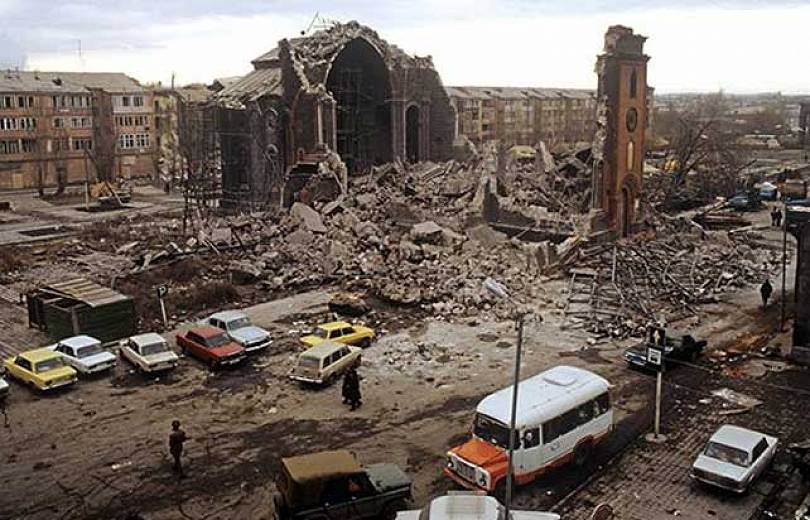
33 years ago, on December 7, 1988, at 11:41 local time, the devastating Spitak earthquake shook Armenia. It affected the northern and northeastern regions of the republic, approximately 40% of its territory.
Within counted seconds, the cities of Spitak, Leninakan, Kirovakan, and Stepanavan, as well as more than a hundred villages and settlements in the districts of Spitak, Akhuryan, Gugark, Aragats, Kalinino, and Stepanavan, were completely or partially reduced to ruins.
More than 25,000 people perished, and 500,000 were left homeless. Seventeen percent of residential buildings, approximately 8 million square meters of living space, were put out of commission. 170 industrial enterprises ceased operations, and around 1,200 livestock buildings were destroyed. The damage inflicted on Armenia’s economy amounted to 13 billion rubles.
Help rushed in from various countries of the world. Hundreds of rescuers and doctors came to Armenia. From the very first hours of the earthquake, all the republics of the Soviet Union began transporting medicine, medical equipment, construction equipment, tents, and food supplies to Armenia, and subsequently carried out construction work. In 1989, more than 40,000 specialists and military personnel from various regions of the Soviet Union were working in the disaster zone.
More than 113 countries and 7 international organizations provided comprehensive assistance to Armenia.
Various states continued their assistance to Armenia in the following years as well. The Italians built an entire residential neighborhood in Spitak, and the Norwegians a modern hospital. The Austrians also built a neighborhood. In Gyumri, a school built by the British was put into operation.
33 years after the earthquake, the concept of the disaster zone has not entirely disappeared. In Gyumri, Vanadzor, and Spitak, there are still hundreds of families living in temporary shelters (domiks).