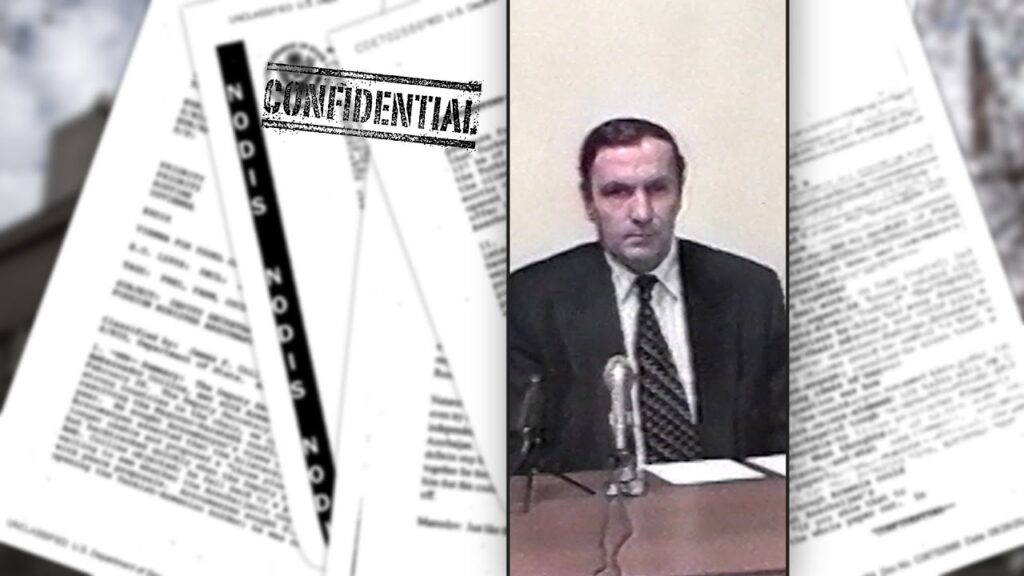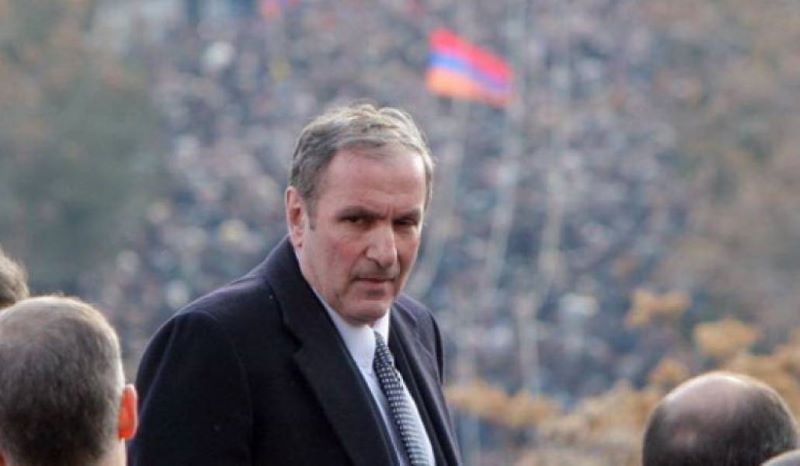
Exactly 25 years ago, on this day, Armenia’s first president Levon Ter-Petrosyan submitted his resignation, noting that such a demand had been placed before him by well-known forces.
“If I have accepted the decision to resign, believe me, it means that I considered the alternative more dangerous for our state,” he said.
In his four-minute resignation speech, Ter-Petrosyan did not clarify who those well-known forces were, why and how they had placed such a demand before the president. He hinted that time would provide the answers to those questions.
Now, declassified documents are emerging from the archives of the United States State Department (the foreign ministry – State Department-Ed.), which testify not only to Armenia’s internal political disagreements, but also to the demands presented behind closed doors by the international community.
In fact, the negotiation process over the Karabakh issue had begun to intensify a year before Ter-Petrosyan’s resignation, in ’97. There were two contributing factors. First, Azerbaijan had begun signing the first contracts for the construction of gas and oil pipelines, and the West was interested in establishing stability and peace in the region. On the other hand, in January of that year, a new format had been formed: the co-chairmanship of Russia, the United States and France. As the State Department’s diplomatic cables testify, at that stage it was in the interests of all three to settle this issue and thereby show that the West and Russia could cooperate and contribute to peace in Europe.
Therefore, just a month after the establishment of the co-chairmanship, in February, the issue enters the agenda of the meeting between US Secretary of State Madeleine Albright and French President Jacques Chirac in Paris. The two Western leaders emphasize that a single united front must be formed to put an end to this story (you can download the document here).

Former US Secretary of State Madeleine Albright and former French President Jacques Chirac
Weeks later, in February, US Deputy Secretary of State Strobe Talbott meets with Armenia’s Foreign Minister Alexander Arzumanyan and asks him to convey to President Ter-Petrosyan that three superpowers are now dealing with Karabakh, and this fact should not be ignored.
“Three important countries with important interests have also assumed responsibility. In the United States, France and Russia alike, there is a growing convergence of interests in moving the parties forward. Ter-Petrosyan should not close his eyes; there will be pressure,” warns James Collins, the US ambassador-at-large, according to the declassified document (you can download the document here).
That the mediators were serious in their efforts to intensify the negotiations is evident from the next diplomatic cable. Days later, the US Deputy Secretary of State meets first with his French and Russian counterparts, Jacques Blot and Boris Pastukhov, and then with Russian Foreign Minister Yevgeny Primakov. In all three meetings, all three sides emphasize that they are ready to act with one front and intensify pressure so that the parties make concessions. It is decided to include the issue on the agenda of the Yeltsin-Clinton meeting to be held in Helsinki in April, a month later. The US President raises the topic during a working lunch.

Former Russian President Boris Yeltsin and former US President Bill Clinton
“I want to expand our cooperation on foreign policy issues, one of which is around Karabakh. Its resolution serves all our interests, and I am ready to work with you to move forward from the dead point,” Clinton says.
Yeltsin responds by insisting that Moscow is only happy with Washington’s involvement: “We will not be jealous; I am confident that your influence will be positive” (you can download the document here).

Former Russian Foreign Minister Yevgeny Primakov and former US Secretary of State Madeleine Albright
“The ceasefire has instilled confidence in Armenians and Azerbaijanis, and they are not inclined to make concessions. But we must make the parties understand that their stubbornness could lead to undesirable consequences,” advises Primakov (you can download the document here).
The very next day, the American Deputy Secretary of State has a telephone conversation with Turkey’s Deputy Foreign Minister Oymen.
“Oymen said that a few days earlier he had had a private conversation in Istanbul with Russia’s First Deputy Foreign Minister Ivanov, who said that Moscow was ready to move forward on the Nagorno-Karabakh issue. If Ivanov has such a feeling, then it is worth trying,” is stated in the State Department’s secret document (you can download the document here).
Two weeks later, the three mediators meet in Washington and, for the first time, combine their ideas, drawing up a single unified document.
Days later, that joint document is discussed and adopted at the presidential level, during the Paris meeting of Clinton, Yeltsin and Chirac.
“The settlement of the Karabakh issue will solve many problems today and rid us of numerous problems that may arise tomorrow,” Clinton says to Yeltsin, according to the declassified State Department document (you can download the document here).
By the end of May, the mediators bring that document, which later became known as the package option, to the region. From the first minutes of the meeting with Armenia’s president until the last moment, the envoys emphasize the same idea: they are united and serious (you can download the document here ).
“The three countries, from their presidents down to their governments, have worked diligently and with full responsibility to advance the peace process,” the US Deputy Secretary of State tells Ter-Petrosyan, according to the declassified document, emphasizing: “The international community expects the parties to respond to their efforts with due seriousness.”
The French mediator Jacques Blot warns: “Previously, the parties were inclined to play on the disagreements of the mediating countries, pitting them against one another, but now the co-chairs are united.”
The Russian ambassador also assures: “The time has come to reach an agreement.”
The leaders of the United States, Russia and France, for their part, during those days at the “Group of Eight” summit in Denver, adopt the first joint statement regarding Nagorno-Karabakh.
“The ceasefire alone is not enough. The international community urges reaching a final settlement, and we are convinced that the establishment of stable and lasting peace in the region should not be delayed,” Yeltsin, Clinton and Chirac had declared.
Despite this unprecedented effort and unity of the three co-chairs, the negotiations on the ground do not move forward.
“I think we need to take action, because if we don’t, we will be treated like scarecrows,” says the Russian Foreign Minister, meeting Secretary of State Albright in Denver, proposing to apply threats and sanctions: “We need to show our teeth. You Americans can do something with the Azeris, using oil as leverage. You can say that if the matter does not succeed, you will not encourage your companies to help Azerbaijan with oil extraction. As for Armenia, we will use weapons as leverage; in other words, Russia can threaten Armenia that it will not supply weapons, and you can advance the oil factor” (you can download the document here).
Despite these warnings, Stepanakert and Baku categorically reject the package option. About two months later, the co-chairs present a new, phased plan, which is based on the same principles, but a so-called extended implementation option is chosen. In particular, while the first, package option, assumed that the return of territories and the determination of status should be simultaneous, now the mediators propose first to liberate the territories, return refugees, ensure Karabakh’s security and self-governance, and then address the issues of Azerbaijan’s territorial integrity and Karabakh’s status.
Against the backdrop of these consistent efforts by the co-chairs, Armenia’s president calls a press conference in September and notes how dangerous it is for the Armenian side to go against the will of the international community: “What, is the international community going to allow this situation to persist for 20 or 30 years? That is out of the question, and the international community will find ways and means to impoverish us so much that we will not only be unable to obtain what we can obtain today through compromises, but will fall into a much worse condition.”

Former President of Armenia Levon Ter-Petrosyan
Three days after Ter-Petrosyan’s press conference, Russian Foreign Minister Primakov meets with the US Deputy Secretary of State and warns that Ter-Petrosyan has come under serious criticism for his courageous stance, and he must be supported. Primakov, well acquainted with the region, emphasizes that “sooner or later it will be necessary to exert pressure on Nagorno-Karabakh” (you can download the document here).
The mediators begin discussing how to convince Stepanakert. French President Jacques Chirac, meeting Armenia’s president in Strasbourg in October, proposes inviting Kocharyan, who had become Prime Minister, and the other influential Karabakh Armenians to Paris.

Former presidents of Armenia and France Levon Ter-Petrosyan and Jacques Chirac
“The goal is to pressure them into reaching an agreement. Then Kocharyan could be invited to Moscow, and then to New York, where he would be told the same thing,” the French Deputy Foreign Minister proposed to the US Deputy Secretary of State, according to the declassified State Department documents (you can download the document here).
The idea, however, yields no results. After Kocharyan’s visit, the French Deputy Foreign Minister conveys to Washington in a secret cable: “We did not succeed in achieving any real change in Kocharyan’s positions, and we do not see any real prospect of starting negotiations” (you can download the document here).

Armenia’s former leaders Robert Kocharyan and Levon Ter-Petrosyan
Trying to explain this phenomenon of outright rejection to the international community, the mediators even speculate that perhaps Ter-Petrosyan and Kocharyan are playing a coordinated game: one rejects the mediators, the other declares he is ready for compromises.
Meanwhile, in reality, everything was more than serious. In Yerevan, the intra-governmental struggle was deepening by the hour. According to the secret diplomatic cables, Russian Foreign Minister Yevgeny Primakov is the first to guess this.
Still a month before Ter-Petrosyan’s resignation, in January, meeting US Deputy Secretary of State Strobe Talbott in Sweden, Primakov says: “Kocharyan wants to become president of Armenia. The Karabakh Armenians are an obstacle; let us not beat around the bush on this issue in vain; instead, let us discuss what we can do” (you can download the document here ).
Primakov proposes tightening pressure on the Karabakh authorities and urgently landing a diplomatic assault there.
“If the Minsk Group mediators go to Stepanakert as, so to speak, representatives of three very serious countries, that will have some effect. It will show that by opposing a peaceful settlement, they are going against the will of the whole world,” the Russian Foreign Minister told the Deputy Secretary of State, according to the secret cable.
Talbott agrees that it is necessary to support Ter-Petrosyan, acknowledging that a real struggle has begun between him and Kocharyan. At the same time, he refuses to travel to Stepanakert and tells Primakov shocking details about the mediators’ last visit to Karabakh.
“Last time, Arkady Ghukasyan compared us co-chairs to the infamous troikas of the Stalinist repressions, accusing us of organizing the extermination of the Karabakh Armenians. I am in no hurry to receive such a reception again,” confesses the US Deputy Secretary of State.
The diplomats decide to meet again in Paris in a few days. Meanwhile, two weeks after this Primakov-Talbott conversation, Ter-Petrosyan resigns.
“I refrain from any comment or assessment in order not to aggravate the situation. I only deem it necessary to note that in the crisis of power, the raising of the Artsakh issue was merely a pretext. The problem is much deeper and is connected with the foundations of statehood, with the alternative of peace and war. And life will show who did what for Artsakh, and who is actually selling it out,” the first president states in his speech.
The option on the table in those days proposed withdrawing Armenian forces from the occupied territories, with the exception of Lachin, creating a dividing line between the parties with a buffer zone, which was to remain entirely uninhabited and under the control of OSCE forces. The Lachin corridor was to be not 5 km as it is today, but 22 km, and Azerbaijan was to lease it to the OSCE, which in turn was to hand it over for use to the Artsakh authorities.
Nagorno-Karabakh was to have its own flag, coat of arms, anthem and Constitution. Citizens could perform military service in the territory of Karabakh, and the Azerbaijani army, security forces and police would have no right to enter Nagorno-Karabakh without the permission of the local authorities. Stepanakert would also gain the right to establish external relations with foreign states and international organizations in the fields of economy, science, culture, sports and humanitarian affairs. After these steps, in the next phase, it was proposed to move on to clarifying the status. Meanwhile, the international community promised to deploy peacekeeping forces, becoming a guarantor of security.
The diplomatic documents testify that in the closed-door negotiations on the issue, the mediators continually emphasized that this was the best that had come to their minds, and the best they could offer the parties. In parallel, the superpowers warned the Armenian side that by not moving toward a solution, Armenia was losing its opportunities for development and prosperity.
“Time is working against Yerevan: while Azerbaijan is growing rich, Armenia is in stagnation,” Primakov had said in ’97, according to a diplomatic cable sent from Moscow to Washington (you can download the document here).
“1997 is the year of decisions on gas pipelines and transport lines. If the Armenian side cannot participate in regional developments, it will cost Armenia dearly, which is in no one’s interests,” US ambassador-at-large James Collins had warned Armenia’s Foreign Minister months earlier.
Deputy Secretary of State Strobe Talbott had also emphasized that Armenia’s participation in energy programs and regional projects depends on the settlement of the Karabakh issue (you can download the document here).
“President Clinton believes it is necessary to make Armenia a participant in the expected economic growth in the region,” Strobe Talbott had said, according to one of the diplomatic documents. The high-ranking diplomat had spoken about the possibility of restarting the Nairit plant and at the same time warned: “This shows what programs are being derailed because of the conflict. Nothing will happen without peace.”
After the first president’s resignation, for more than two decades, all three of Armenia’s leaders adopted a policy of maintaining the status quo. All three, at different stages of their rule, accused Ter-Petrosyan of defeatism and betrayal.
3 February 2023
“AZATUTYUN”