Everything points to the fact that Joe Biden’s administration will recognize the Armenian Genocide, more than a century after it took place. The National Interest wrote about this in its article.
On April 24, 2020, then US presidential candidate Joe Biden wrote on his Twitter page: “If elected, I will support a resolution recognizing the Armenian Genocide and will make universal human rights a priority.”
It seems that his administration remains faithful to this commitment.
On March 22, 2021, Ian Bremmer of the “Eurasia Group” reported that “White House sources” told him that the process of Genocide recognition would continue. Although Bremmer noted not only Joe Biden’s campaign promise, but also that Vice President Kamala Harris was one of the co-authors of the Genocide resolution in 2019, he also rightly noted that President Barack Obama had made a similar promise but later backed away from it.
That is precisely the problem: there is a process in government where officials believe it is useful to distort history or erase an existing tragedy in the name of short-term diplomatic necessity. Samantha Power wrote a book about this, yet in any case, she not only failed to defend Armenia with moral clarity, but later ignored the ongoing genocide in Syria. US climate envoy John Kerry, when he was a senator, also sponsored resolutions on the Armenian Genocide, but upon moving to the executive branch, he forgot about it.
Secretary of State Antony Blinken promised during his first weeks in office to pay greater attention to human rights, but he has already shown a willingness to sacrifice principles for the sake of policy. For example.
1) In the State Department’s latest report, Blinken revised his position in favor of reducing the number of casualties from the suppression of protests in Iran, in order to facilitate the Biden administration’s Iranian diplomacy.
2) As during the Obama administration, Blinken has also broken promises to protect American hostages held in the Islamic Republic’s prisons, again in the belief that the defense of human rights could hinder his team’s working relations with Iranian counterparts.
3) Blinken has also yielded to the moral equivalence of his Africa Bureau and has become a toy in the hands of lobbyists who want to diminish the nature of the genocide that took place in Rwanda.
4) The State Department’s Africa Bureau, in all likelihood, still does not understand the seriousness of Ethiopian Prime Minister Abiy Ahmed’s actions in Tigray. Simply put, the Nobel laureate seems to be taking Tigray down the same path whose foundations were laid 27 years ago by Hutu extremists in Rwanda.
Many Armenians may dislike the late historian Bernard Lewis, because he questioned the premeditated nature of the Armenian Genocide and attributed the million-plus killings (which he did not dispute) to the fog of war. Nevertheless, later information inaccessible to Lewis at the time confirms the premeditation. Lewis was as honest as he was educated; if he were alive today, the evidence would have changed his interpretation.
There is another reason why Armenians should not entirely reject Lewis. Lewis wrote: “We live in an age when enormous potential is expended on the falsification of history, to flatter, deceive, or serve some partisan purpose. No good can come of such distortions, even if they are inspired by disinterested motives.” This is Lewis’s statement, which Armenians and those interested in historical truth should avail themselves of today, because it underscores the importance of not allowing short-term diplomatic interests to distort the course of history.
In the Biden administration, many within the State Department and the Pentagon may find incentive to avoid Biden’s commitments or give them moral equivalence. Both the State Department and the Pentagon may conclude that hostility toward Erdogan could force him to attack the eastern Mediterranean. There are already warning signs that Biden and Blinken are hesitating: for example, despite all their tough talk about Turkey, they have strengthened its dictator Erdogan by making him the master of peace negotiations in Afghanistan. Then there is also Nagorno-Karabakh, where Turkey and Azerbaijan launched a 44-day war last autumn and where peace is fragile.
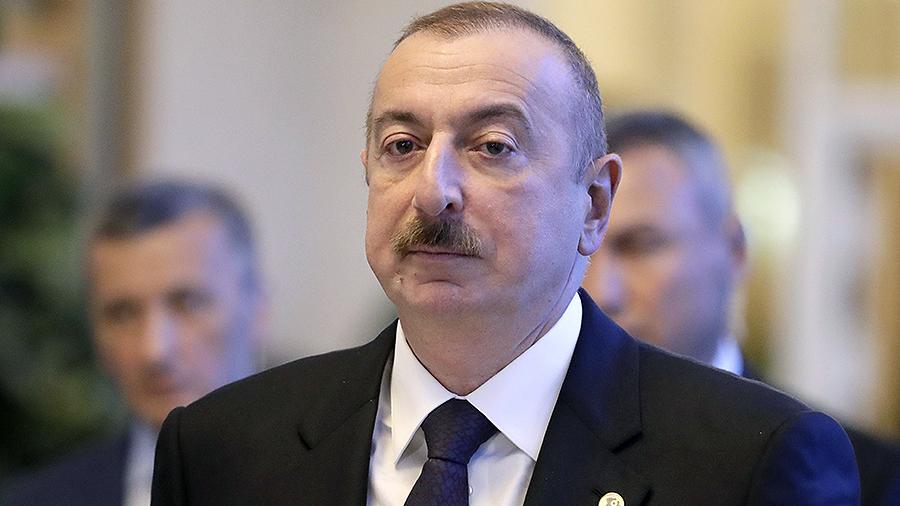
None of the above justifies the distortion of history. Not only the fact of the Armenian Genocide, but also the diminution of its role can prove costly. Azerbaijan and Turkey had timed their September attack on Armenian-populated Nagorno-Karabakh to coincide with the 100th anniversary of the Ottoman Empire’s invasion of newly independent Armenia. Both Erdogan and Azerbaijan’s dictator Ilham Aliyev used extermination rhetoric, showing that their ultimate goal is to wage a religious war and uproot Armenia itself. Showing Turkey that accountability can be circumvented ensures further aggression not only against Armenia, but also against the Kurds and Cyprus.
Although recognition of the Armenian Genocide is both right and wise, Biden and Blinken must go further. Genocide denial undermines long-term security, and therefore Blinken could consider the placement of Armenian Genocide memorials in both Ankara and Baku as an indicator that would allow determining whether Genocide recognition goes beyond the limits of rhetoric. Such a step would also help free from the historical blindness that has been fostered by Turkey for decades.
The Trump administration had underestimated diplomacy in the South Caucasus by appointing a Minsk Group co-chair who lacked the diplomatic rank of his Russian and French counterparts. The United States could also offer the Kosovo model for the Republic of Artsakh. In that case, Blinken should send a permanent diplomat to Stepanakert.
Genocide recognition is important, but not sufficient. Given the presence of tyrants to both the east and west of Armenia, it is important to recognize that the threat from a century ago continues to this day. Empty rhetoric can prove very costly.