The Prime Minister of the Republic of Armenia, Nikol Pashinyan, has explained why the process of creating a committee in the National Assembly to examine the causes and consequences of the 44-day Artsakh war is being delayed.
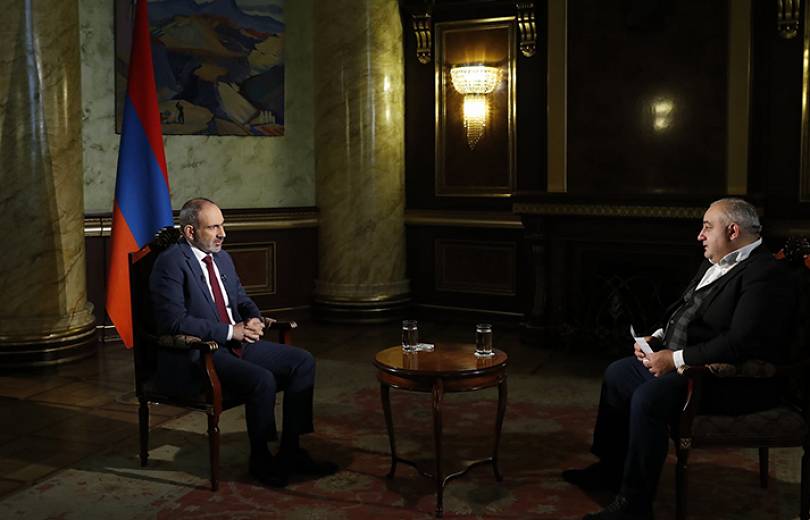
According to Armenpress, in an interview given to the Public Television, Pashinyan addressed the question of when the National Assembly committee that will examine the causes and results of the war will be created, as well as the opposition’s statement that they will boycott the work of the committee if the balance of forces within it is violated.
“Are we talking about a balance of forces there, or are we talking about revealing the truth? Ultimately, a substantive discussion is going to take place there, and no one can prevent anyone from expressing their opinion. And if there is a lie, to point out that lie and prove the existence of that lie. The next question is when the committee will be created. In essence, look — why has the committee not been created until now? For a very simple reason. First, you know that the committee is practically created, because according to the Law on the Rules of Procedure of the National Assembly, the role of the investigative committee in the security sector will be performed by the same parliamentary committee on security and defence issues. That is, the committee exists, it is in existence. Why has it not been created until now? Because first, not all opposition deputies have applied for and received permission to access highly classified state materials. There is a process prescribed by law for that, and most of the materials there will be discussed under a regime of high secrecy,” said Pashinyan.
He added that they have an understanding that extra-parliamentary forces are to be involved, and also representatives of the relatives of the victims and the missing are to be involved. Under the current law, such a procedure for directly including them in the committee’s composition does not exist. “And now options are being considered for how to involve them, also with their consent, because that balance you mentioned cannot, in essence, be violated, because the committee operates according to the Law on the Rules of Procedure of the National Assembly, and decisions there are made according to the Law on the Rules of Procedure of the National Assembly. If we are talking about balance, one way or another, from the very beginning the authorities have a majority there,” the Prime Minister detailed.
“Theoretically, we can make changes to the Law on the Rules of Procedure of the National Assembly, extend it, but it is also important that the term of that committee’s activity not be so unlimited, because you said that the public expects answers. I must say that I personally am very interested in those answers being given, and I expect that yes, not only the military episodes of the war itself should be examined, which is also very important. The issue of army-building that I mentioned must be examined. I want the committee, ultimately, to answer one question as well. I, for example, say that after 2018, after I was elected Prime Minister, there has not been a single case where the army said — we need this or that thing, and we said — you know what, there is no money to provide it. There has not been a single case. And you know, those much-speculated-about Su-30SMs are the clearest proof of that. The army said — it is needed. Moreover, it is very important. I received several written notes saying that it should not be acquired, and so on. I endorsed those notes, I said — you know what, there is a professional body, discuss it and give an answer — ultimately, is it needed or not? They discussed it and answered in writing that it is needed. I said — it is needed, so we will buy it. I want the investigative committee to answer that question. I want and I expect, I think the public does too, that the investigative committee study the negotiation process, the entire negotiation process, starting after the recording of the ceasefire and victory of 1994,” said the Prime Minister.
According to him, if they do not study that, they cannot understand what ultimately happened. “Ultimately, what happened? It is very important for me that it be recorded what condition we inherited the negotiation process in in 2018. And it is not even essential how we inherited it. What happened in the negotiation process, because until we go deeper, we cannot understand what happened,” said Nikol Pashinyan.
To the observation that the opposition expects that the authorities’ actions will be examined with the same strictness, the Prime Minister replied: “And who says no? Let them first examine our actions with the utmost strictness, there is no problem, who is against that? And that signal that we might boycott is perhaps first of all about the fact that they are refusing to participate in the most rigorous examination of our own actions, because they are very well aware of what will be the result of that examination. Ultimately, they say — secret, secret, but in essence, there is not much of a secret, the secret is in the details, because much has been said publicly, and they themselves shaped that content. And why are they refusing, when in the autumn of 2017, Armenia’s number one negotiator was saying that we are ready to hand over the 7 regions, but Azerbaijan keeps making new demands every time. Let us understand what happened,” concluded the Prime Minister.