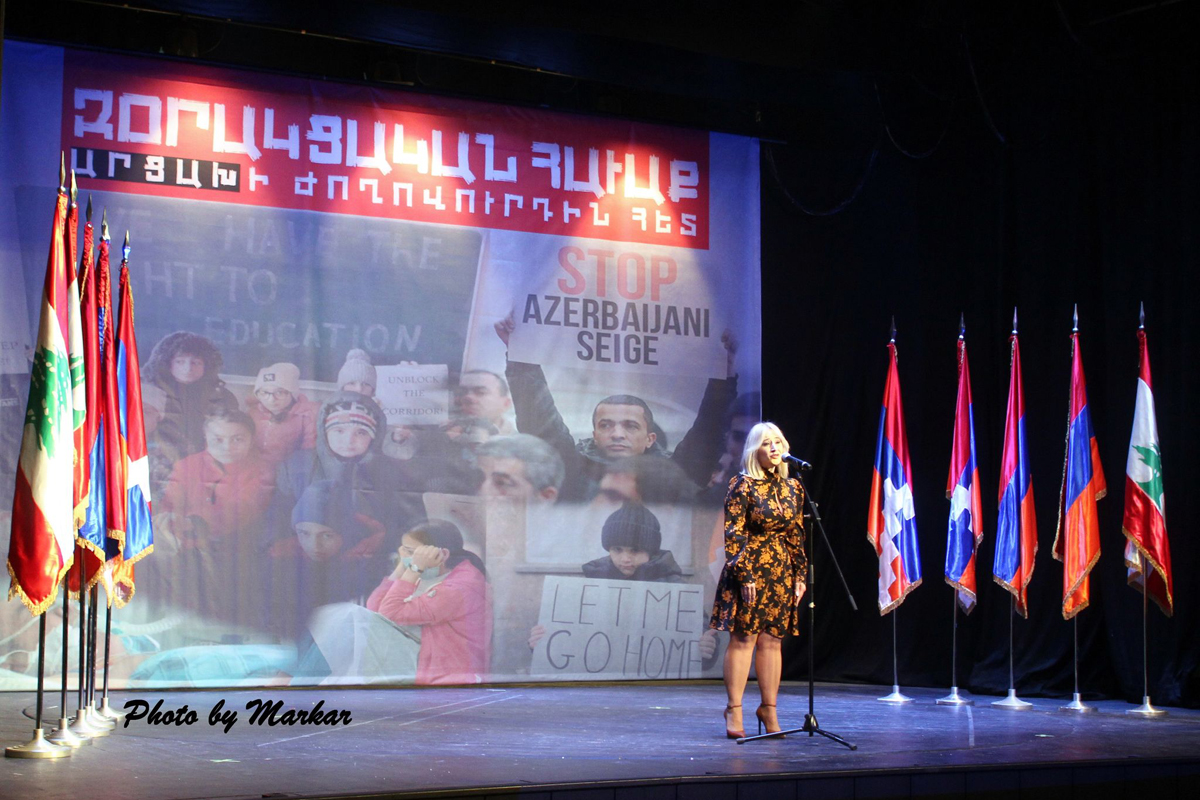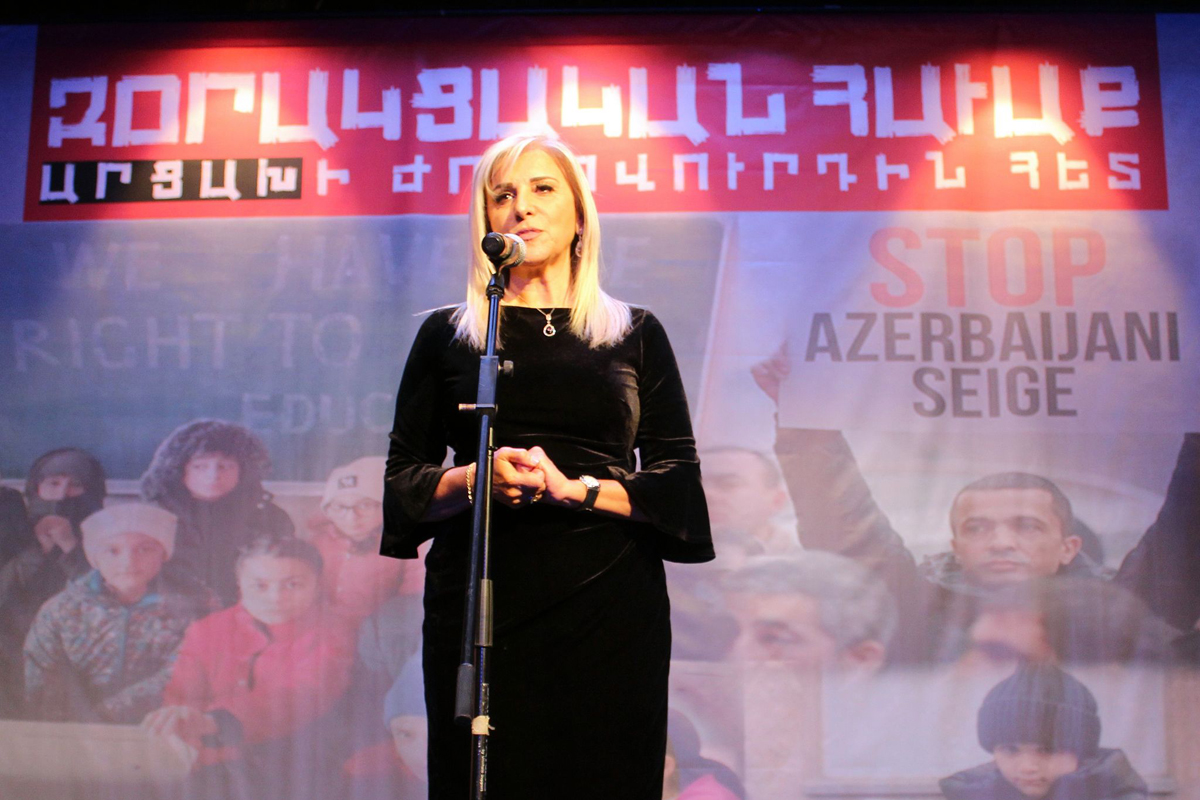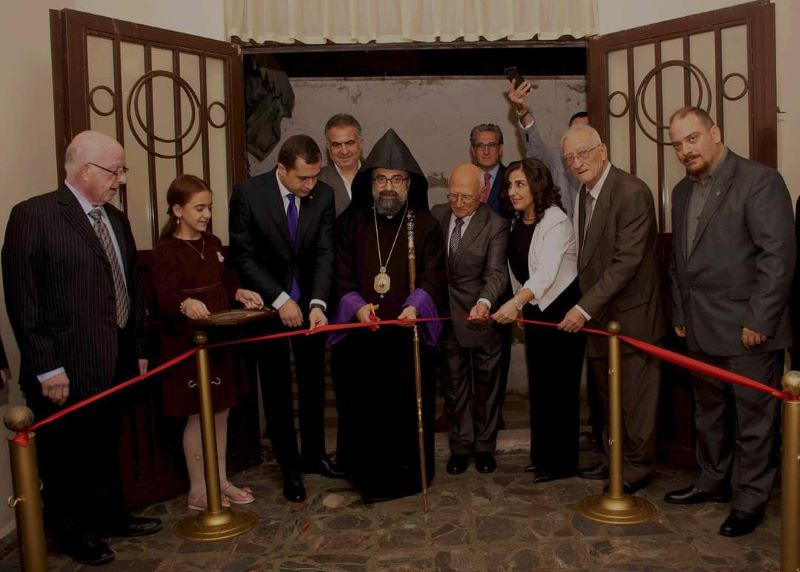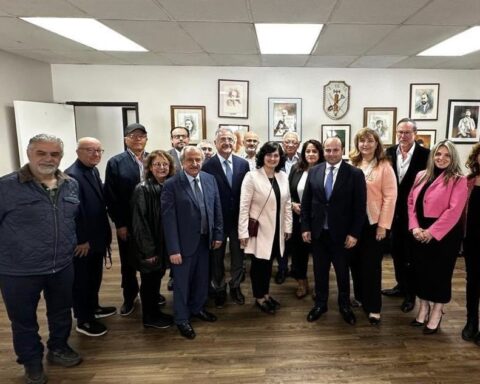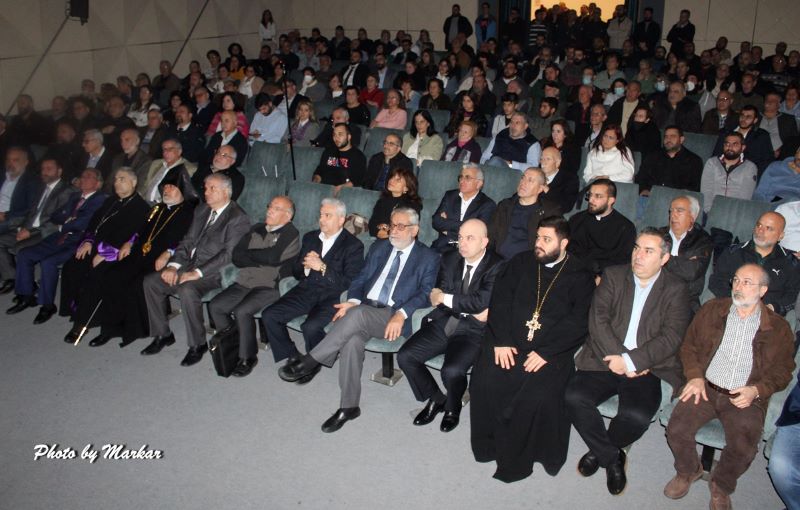
On Monday evening, 19 December, a solidarity gathering with the people of Artsakh took place, organized by three Armenian political parties, at the “Hagop Der Melkonian” hall in Bourj Hammoud. Present were ecclesiastical, political, and union representatives, as well as a large crowd. The enemy had surrounded our sisters and brothers in Artsakh. The time has come to act now. Tomorrow will already be too late. The enemy could not defeat the Artsakh Armenian through physical warfare; today it is attempting the form of psychological pressure. The goal is depopulation. To empty the land of its native, true owners. It is time for the Armenian people to unite to support the Artsakh Armenians, considered one of their three main components, and to make their just voice heard.
After listening standing to Lebanese, Armenian, and Artsakh marches, Gali Avagyan, welcoming those present, declared the event open. “For us, the inviolability of the homeland’s borders is a paramount issue; for us, in the face of the new offensive unleashed against the Armenians, the strengthening of Armenia’s statehood and diplomacy, and through that path the use of our pan-national potential, continues to remain a firm conviction,” he emphasized in his opening remarks.
Then, speaking via online connection, the President of the National Assembly of the Republic of Artsakh, Artur Tovmasyan, welcoming the Lebanese Armenians, said: “Only distance can divide the worldwide Armenian people.” The homeland’s parliamentarian recalled his impressions of Anjar, which “has so many commonalities with Artsakh.” Clarifying the current situation in Artsakh, “Artsakh stands before a humanitarian catastrophe,” observed Tovmasyan, stressing that Azerbaijan openly tramples upon the rights of the Artsakh Armenians to live and to life. Expressing his deep gratitude for the efforts of international peace-related structures, Artur Tovmasyan emphasized that calls are not enough, “we need effective and visible steps,” he stressed. “Artsakh’s crisis is gradually turning into a deadly crisis,” observed Artur Tovmasyan. He noted that the civilized world should be concerned about what is happening today in Artsakh. “The people of Artsakh have given their heroic decision: to firmly maintain their statehood and live in dignified peace,” said Tovmasyan, and added: “Artsakh cannot be part of Azerbaijan; that is impossible. The Artsakh issue has one solution, which must take place on the basis of the international principle of the right of peoples to self-determination.” Tovmasyan addressed a call to the entire Armenian people and concerned parties to stand by Artsakh. Artur Tovmasyan deemed the Armenia-Artsakh-Diaspora trinity strictly necessary and viewed the Russian role as positive and important. “The path we have chosen remains irreversible today; our struggle is continuous, and our will to live on our ancestral land is unbreakable,” emphasized Artur Tovmasyan.
In turn, former Human Rights Ombudsman of Artsakh and advisor to the State Minister, Artak Beglaryan, detailed Azerbaijan’s blockade of Artsakh and its consequences in humanitarian, health, and daily-life terms. Beglaryan noted that Azerbaijan, through its genocidal policy, with ridiculous and false justifications, plans through the blockade to depopulate Artsakh. “Our clear demand must be that the blockade of Artsakh be lifted and the prevention of similar incidents be guaranteed; otherwise, Azerbaijan and the Aliyev regime must be held clearly accountable for both these and their previous crimes,” stressed Beglaryan, calling for solidarity with Artsakh not only through informational but also protest actions, and demanding the international recognition of Artsakh.
On behalf of the three organizing parties of the solidarity gathering, Zakar Keshishian delivered the message of the day. With a brief overview, he touched upon the historical course of the Artsakh survival struggle and the positions of the concerned Armenian and other parties along this line, from the Soviet period to the liberation of Artsakh.
He said: “We have not yet come to our senses. While time rolls on, the unfinished war continues, and more than 120,000 compatriots in diminished Artsakh have now been blocked for a week under absurd justifications. The international family is silent and complicit. The enemy resorts to every means to demoralize the Artsakh Armenians and push them toward leaving the homeland. The enemy thinks that over time it will be able to realize its cherished plan of ‘Artsakh without Armenians.’ The challenge is great.
“The Artsakh Armenian, who won the first Artsakh war, today comes once again to declare and affirm that he is the master of his home, his land, and his water. He has nowhere else to go. The graves of his ancestors are in Artsakh.”The Artsakh Armenians today again live through a sad, uncertain, and dangerous new phase of life. Today they live this phase also in our place and yours, because Artsakh, as ancestral land, belongs not only to the Artsakh Armenian, but also to the entire Armenian people, and the entire Armenian people has there not only the rights and assets of a householder, but equally duties and obligations. Artsakh is not merely a resort and cannot be so for the homeland-loving diaspora Armenian nourished and raised on national values. Today too, the Lebanese Armenian community, as in the past, is again ready to continue its struggle in the name of Artsakh and the just struggle of the Artsakh Armenians,” emphasized Zakar Keshishian.
“Today Artsakh is our Sardarapat. The Berdzor (Lachin) corridor, the sole lifeline of Artsakh, is closed by Azerbaijan. The Azerbaijanis hold hostage under their control 120,000 human beings, who are deprived of electricity, gas, fuel, medicine, food, and other vital necessities. The specter of hunger and freezing hangs over them like a sword of Damocles. They live through a complex moral-psychological crisis. And we, as Lebanese Armenians, and everywhere where there is an Armenian, each of us must remain ready and committed to personally light a candle illuminating the life of Artsakh and the Artsakh Armenians. It is with this awareness that we are gathered here today to express our unconditional solidarity with our unbreakable sisters and brothers of Artsakh,” concluded Zakar Keshishian.
On this occasion, an artistic program was presented, during which soprano Shoghik Torosyan performed a solo, “Song of Remembrance.” Similarly, Ani Yepremyan recited a special poem titled “Artsakh.”
The event closed with the victory anthem “Sardarapat.”
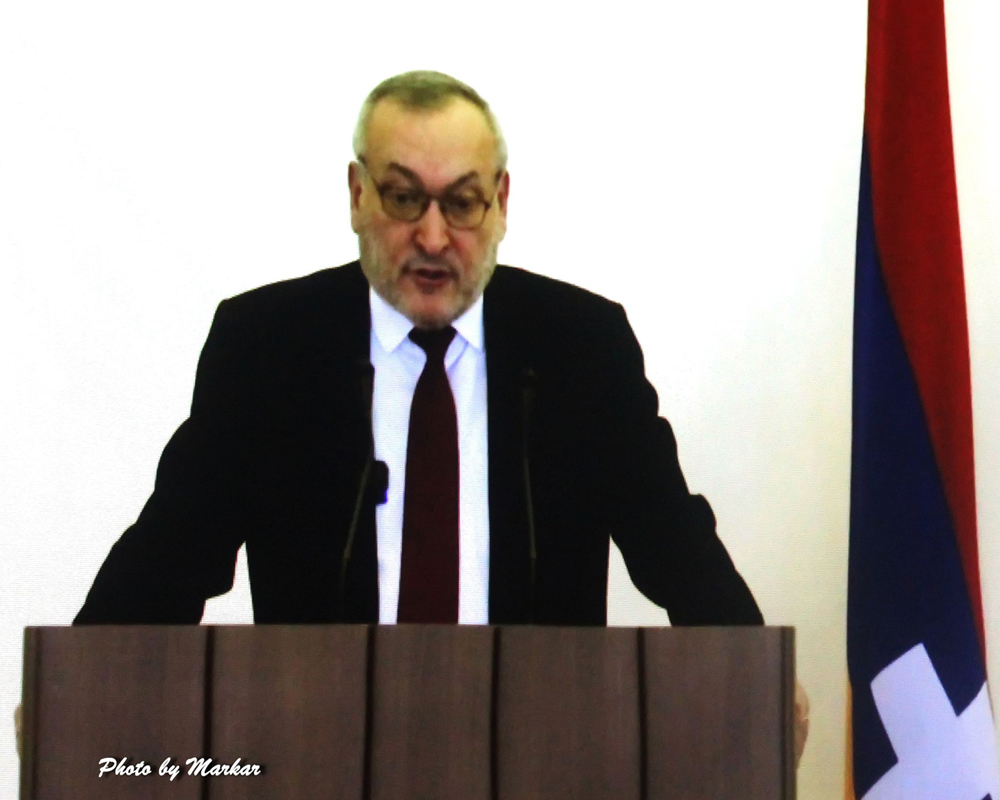
Artur Tovmasyan

Artak Beglaryan
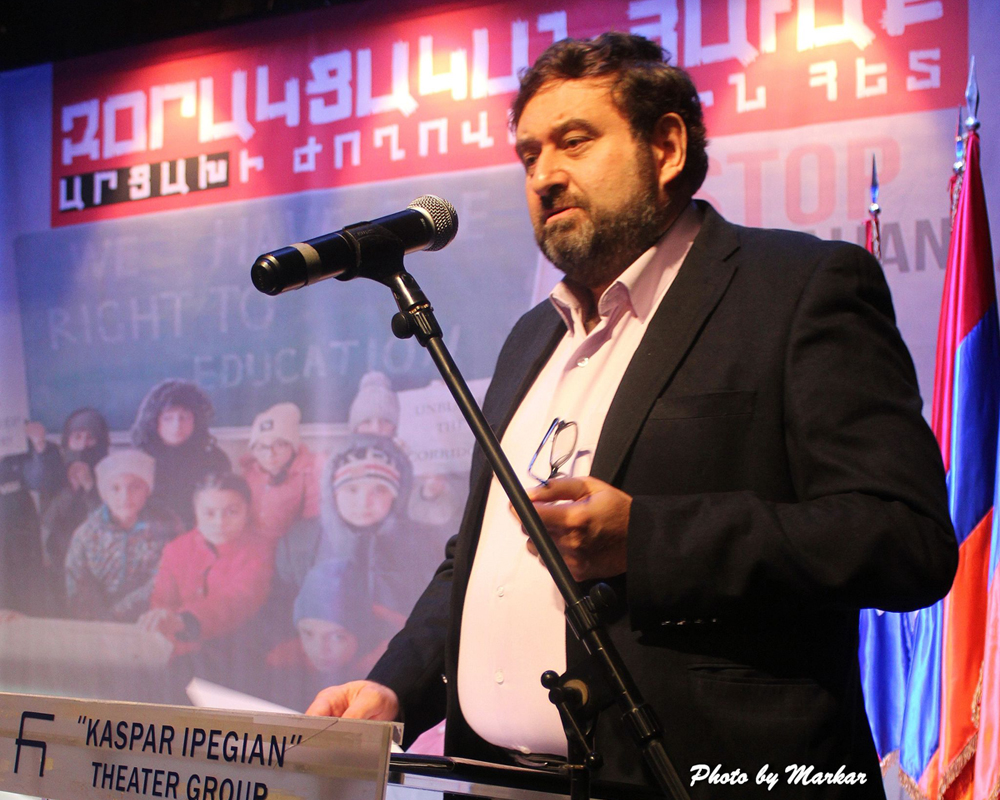
Zakar Keshishian