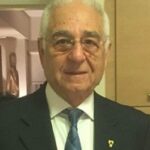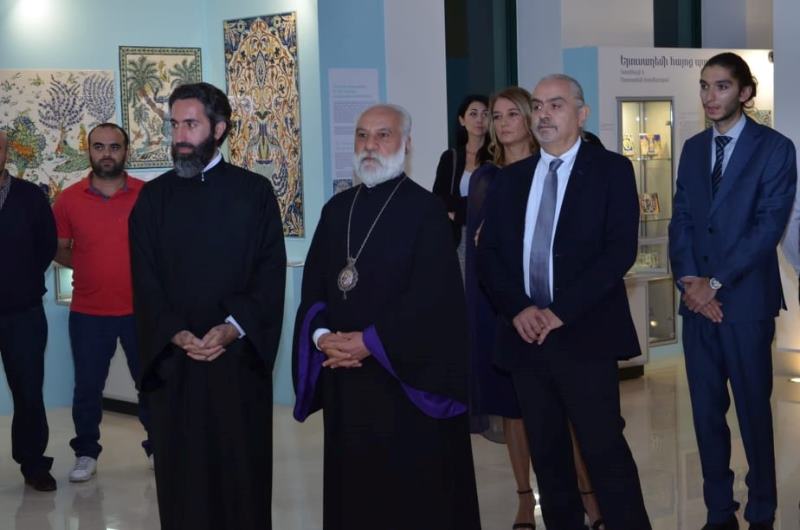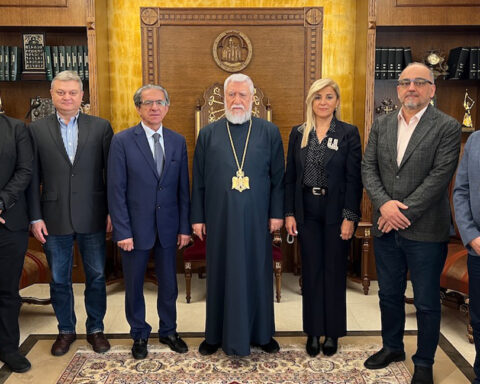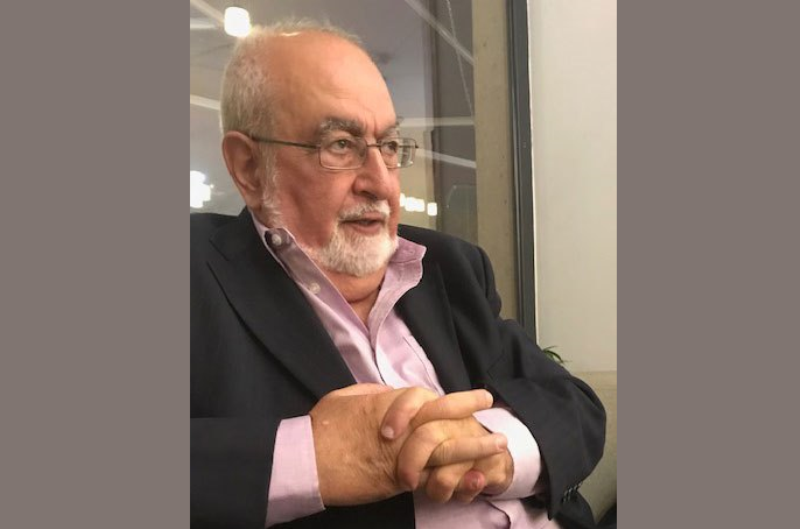
Asadour Devletian, a Cypriot-Armenian intellectual who has held responsible positions in the ADL and the AGBU, answers our questions.
-Dear Mr. Devletian, since Armenia’s independence, various segments of society living in the diaspora have begun to say that the diaspora and diaspora Armenians, with their role and presence, have started to become less important. Of course, in the face of this approach, there were also people, intellectuals, who affirmed and advocated for the role and importance of the diaspora. Fortunately, you are one of them. How do you interpret, or how do you explain, your confidence in and emphasis on the role given to and to be held by the diaspora?
I would say that a metal coin has two faces. The first face is longing for the homeland, even the aspiration for repatriation, and this is a very positive phenomenon; it speaks to all our hearts. But it is also true that the approximately seven million Armenians living abroad will not return to Armenia. After all, this country is not capable of sustaining ten million inhabitants, because the conditions do not exist, the territory does not exist, it cannot be self-sufficient, and probably, viewed from the other side as well, ten million people may not have the desire to come. As for the diaspora, it is clear that there are mixed marriages there; there are people who are settled, rooted, and it is difficult to be uprooted. Wanting is one thing; accomplishing is quite another. I, for example, would very much like to live in Armenia, but I do not know whether my children or grandchildren would say the same…
In any case, the diaspora will continue to exist. On the other hand, the diaspora is Armenia’s wealth, because even if to a small extent, in all fields—material, moral, political, economic—if it can assist Armenia, that is a benefit, and being deprived of that benefit could create a serious crisis. Therefore, regardless of our will, a certain number of Armenians will continue to live outside Armenia, and we are aware that their being there and their vitality is advantageous for Armenia. We must keep the diaspora vital, but this does not mean that we are opposed to or in any way against the idea of immigrating to Armenia. Keeping the diaspora vital means, at all costs—I emphasize, at all costs—keeping our schools alive, because it is difficult to imagine the preservation of the nation without schools.
-From your perspective, is the existence of schools in the diaspora the foundation of Armenian preservation?
It is certainly not only through schools that Armenian preservation takes place, but we hardly have the other factors; they have begun to diminish. The state of the clubs serves its purpose in very few places. Whereas in previous periods, generations received broad education within the clubs.
-What is the reason that a significant segment has become alienated from the clubs? For example, does this phenomenon exist in Cyprus as well?
Yes, it exists even in Cyprus, but there are probably several reasons for that. First, times have changed and we have not been able to keep pace with the things that could awaken interest in the new generation, because if what might be called “attractive” means are lacking for them, then members of the new generation are reluctant to come and prefer to go elsewhere.
-Is it not that Armenian clubs do not meet today’s conditions? Is that the real reason our youth, in a way, shy away from Armenian clubs and the Armenian environment in general?
Most of our clubs do not have the modern facilities you mentioned. And what they do have is little and insufficient. On the other hand, mixed marriages, independent of us, have multiplied, at an alarming pace, it must be said. Children born of mixed marriages need a special education. There, one must not frighten away the identity of the second parent; one must not create the impression that one identity is superior to the other—no one has that moral right. We must simply work to instil pride, to the greatest extent possible, for one of their identities, so that that young person himself will also want to connect with his identity, without ever opposing the other.
-Mr. Devletian, we spoke about the school environment and the clubs, and when we say diaspora, the reality of the three traditional Armenian parties takes shape in our minds. Today we know that all three parties have vulnerable points, they have crises that we often do not want to speak about, but it is clear that all three of the three parties are in crisis. What is the reason for this crisis? It is also clear that the current crises have been exaggerated since Armenia’s independence.
However much Armenia’s independence caused incomparable joy to all, it also came to confirm that the traditional Armenian parties were not ready for that achievement. Perhaps our parties, in a way, hastened in their aspiration to repatriate. I believe that Armenia has a sufficient number of political currents, and in reality, that ideology which 100-120 years ago had brought Western Armenians together around one goal, one aspiration, one dream. This is somewhat at odds with the psychology of the people of Armenia; they will not grasp the idea of “death or freedom” so easily, and my humble opinion is that the traditional parties should, to the greatest extent possible, remain diaspora parties. Sometimes the question arises: what is there to do in the diaspora, now that Armenia is already independent—let us close everything and come to Armenia… There are two things to do in the diaspora. The first is the preservation of the nation, and the political parties have an important role in this sacred work. I believe that the heroic accomplishment of national preservation, to some extent, is also owed to the activities, efforts, programmes, and sometimes interventions of the political parties over the past hundred years. Apart from national preservation, there is a supreme goal: for reasons known to us or perhaps unknown, the authorities of Armenia are not capable of, and should not, as a matter of priority, deal with the issue of reparations. However, it must not be forgotten that this is an urgent issue for the Armenian people, because it is a question of dignity.
-Is it not, in some way, an anti-state approach for the authorities of Armenia to recognise the Great Genocide, to use everything as a resource for its recognition, and to direct all state means in that direction? Of course, I am not saying that we should forget and set aside everything, but nevertheless, there is a viewpoint that there is a clear imbalance in the chosen methods of action. What would you say in this regard?
I do not have a clear answer to the issue you have raised. But nevertheless, to examine these questions, a number of important realities must be taken into account.
-On various occasions, the authorities of Armenia themselves were the force that turned the Great Genocide into a political unit. Have you ever felt that the authorities of Armenia were doing all this only for internal consumption?
Sometimes we have that impression involuntarily, and perhaps we are not judging correctly, but this allows me to make the following observation: the Genocide has not been voted on as a resolution of law in the parliament of Armenia. In 1988, the Supreme Soviet of Soviet Armenia adopted a resolution on that matter, and the greatest allusion made since then is that this resolution has not been denied, even on the occasion of the centenary, which was a very opportune occasion. Now, as an objection, I say: a thing that happened—how can it be recognised—but our National Assembly has made no resolution from 21 September 1991 to this day. And we expect the parliaments of Belgium or Sweden or others to adopt a position on this, but our parliament? It has no position. The parliament of the Republic of Artsakh also has no position. For me, all this is an intolerable puzzle, but connecting it with the earlier thought—is there perhaps a caution on the external front…
-In your opinion, where does the reparations dossier stand today? We know that the first to speak on that matter was Catholicos Aram I of the Great House of Cilicia, when he brought the issue of the Catholicosate of Sis to the table. Despite the fact that that case was not accepted in Turkey, this time Catholicos Aram I took the issue to the European Court of Human Rights (ECHR). It was not accepted there either; now there is talk, and the latest statement was that the Catholicosate would present the legal claim before the local courts of Turkey.
The value and importance of this reality is that at least they have begun to speak about it; even when the claims are rejected, the phenomenon is positive. In reality, a complete dossier must be prepared for reparations. We have lost wealth, we have lost our own properties, we have lost riches, we have lost communal wealth—churches, church-owned lands, hospitals, schools—we have lost people, we have also lost the right to use all these, we have been deprived of the right to use our property; all these are grounds for reparations, but we have also lost a homeland, a birthplace. It is true that we did not have statehood on those lands, but we had the right to reside, because we lived there for centuries, and however much they have destroyed our traces, there are other means of proving it—historical facts, foreign travellers, historians have records about that. Therefore, even if we did not have statehood, in any case, our sweat was shed on those lands; on those lands we lived continuously for dozens of generations, and we have been forcibly deprived of that right.
-The former authorities of Armenia spoke about an important issue, which is creating a parliament representing the diaspora. How realistic is that, and should today’s authorities take practical steps in that direction?
That proposal sounds very pleasant to the ear. In reality, however, it is a very “tough” question, and I am not convinced that the authorities of Armenia, forgive me for saying so, approach the issue with that seriousness and that meticulousness. Let me say why I think so. In Armenia there is one course of Western Armenian, a programme brought to life by the efforts of Hamazkayin, which two or three boys or girls follow for the whole year, all of them Western Armenians at that… This means that the people of Armenia remain completely unacquainted with Western Armenian. We have a Kurdish department at Yerevan State University, but no teaching of Western Armenian. I will not even speak of the Turkish department, but having a Kurdish department while having no Western Armenian department is unacceptable. I am not saying that this shortcoming also exists at the school level. And the former Ministry of Diaspora, whose very name was wrong, could not be a Ministry of Diaspora composed of Armenians from Armenia. It could have been a Ministry of Relations with the Diaspora, even a Commission for Relations with the Diaspora; linguistically and logically it was wrong. Second, with all due respect to all the positive achievements that have been made, which I know of or do not know of, nothing tangible has been done to make Armenia’s relations with the diaspora as effective as possible. The Ministry of Diaspora had no connection with the diaspora Armenian schools, with their needs, nor did it know what problems the diaspora had. The Ministry of Diaspora was satisfied with giving medals to random people; you wonder…
-We have spoken enough about the issues of the diaspora and today’s reality. How do you view Armenia’s Velvet Revolution, this new “identity” of Armenia?
The Velvet Revolution demolished a great wall—the wall of despair—which could truly have afflicted our nation very seriously; therefore, had that wall of despair not collapsed, a very terrible situation would have threatened Armenia. Now that wall has been shattered, or if not completely shattered, it has received a great blow, and there is the optimism that it will collapse entirely. I am optimistic in the sense that what happened is a major step forward, but it would be a very reprehensible naivety to think that when we go to sleep tonight and wake up in the morning, everything will have changed for the better. Great patience is needed, there is a need for conscious sacrifice, and we must stake everything on the pledge of hope. There is a saying in English that says: when hope disappears, the heart breaks. Now hope has been restored in our hearts, and I believe that it is the duty of each and every one of us, starting with the authorities, to do everything in a very serious manner so that this hope is realised.
-You have held responsible positions for many years, especially in the Armenian Democratic Liberal Party. What situation does this glorious party present today?
Unfortunately, neither very bright nor very satisfactory, but it can reform itself, renew itself, and personally I am optimistic that it can. At present there is a crisis that also concerns the other parties. Perhaps in the foundation of our survival we failed to pay important attention to the education of the next generation; with very commendable initiative and enormous sacrifices we brought schools to life that produced excellent results, but somewhere we confused the mission of those schools and began to take pride, for example, in having achieved a one hundred percent success rate in state examinations, without being ashamed that some of those who succeeded one hundred percent in state examinations have an intolerable level in spelling, or cannot even express themselves clearly in Armenian. So it was clear that the emphasis was placed on the wrong thing…
Sago Aryan
“Zhamanak”/Istanbul