In recent times, members of the Turkish extremist “Grey Wolves” terrorist group have become a security threat for Europe. This was reported by the Kurdish news site “ANF News,” as reported by Ermenihaber.
As early as 4 November, the French government officially decided to ban the activities of the “Grey Wolves” organisation, which unites Turkish nationalists, on its territory. The reason for this was the march organised by the “Grey Wolves” in the French city of Dijon on 29 October, during which calls for violence and hatred against Armenians were made.
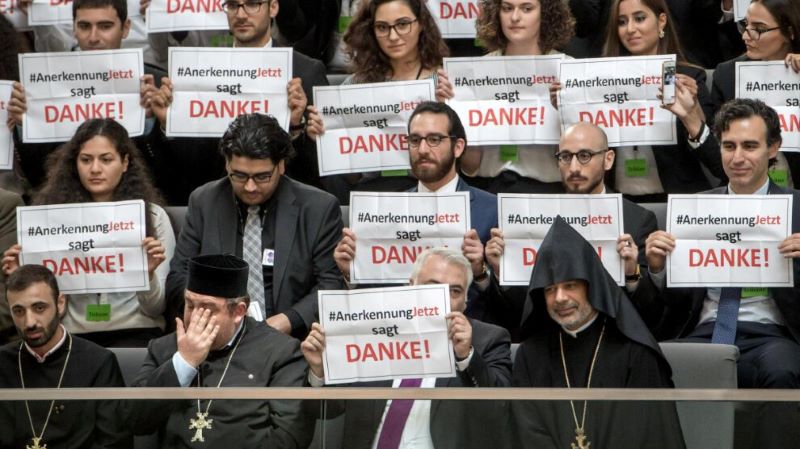
Following the incidents in France, a number of representatives of the opposition and ruling parties in Germany came forward with numerous initiatives to ban the activities of that organisation. In particular, on 19 November a draft resolution was adopted in the Bundestag. In that resolution, the federal government is called upon to take measures to suppress the influence of the nationalist “Grey Wolves” movement in Europe, to monitor their activities in Germany, to study the grounds for banning the organisations, to inform the public and institutions about the targets of that movement, and to use all legal means to counter the propaganda of the extremists.
Despite those measures taken in European countries, in recent days Turkish extremists are sending numerous letters containing threats to Armenians living, in particular, in Germany.
According to the German newspaper “Die Welt,” the most threats directed at Armenians have been made in the German cities of Hanau, Osnabrück and Hamburg. The newspaper also noted that a significant increase in letters of the same content has been observed since the second Artsakh war.
In an interview given to “Die Welt,” Armenian lawyer living in Germany, Elias Wiarr, stated that Armenians living in Cologne and Berlin are being threatened with death by phone calls from the same number.
In connection with these incidents, the leader of the Armenians of Germany, Bishop Serovbe Isakhanian, addressed a letter to Herbert Reul, the minister responsible for internal affairs of the German federal state of North Rhine-Westphalia, presenting the concerns of the Armenians living in that country.
In the letter, Bishop Isakhanian drew attention to the campaigns launched by Turkish extremists.
The Kurdish news site also noted that after years of Europe turning a blind eye to the actions of Turkish nationalists, it has finally, over the past month, begun taking steps to ban the activities of these groups.