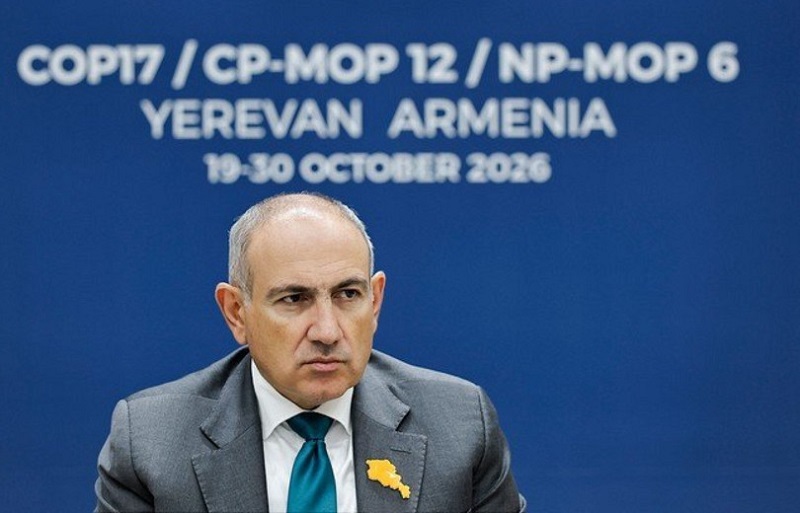
Protecting biodiversity is a matter of particular importance for the Government of Armenia, and we feel a special responsibility toward our nature, because I must admit that in Armenia’s difficult days our nature saved us, and we have had the misfortune of abusing it.
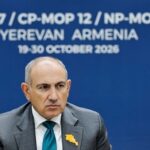
Prime Minister Nikol Pashinyan said this during his opening address at the plenary session of the leaders’ summit on biodiversity issues.
“In the early 1990s, when Armenia gained independence, an energy and socio-economic crisis began in Armenia as a result of the collapse of the Soviet Union’s economic system and the conflict. The country found itself under blockade, there was not enough electricity, gas, oil products or coal, and people heated their apartments mainly with wood.
The capital Yerevan was very quickly transformed, and thousands of chimneys coming out of the windows of apartment buildings could be seen. Under these conditions, mass felling of Armenia’s forests began, which, amid the almost complete absence of normal economic activity, became one of the country’s profitable businesses. Even the trees on the streets and in the parks of the capital Yerevan were cut down, and it was very difficult for the authorities to fight these phenomena.
Thus thousands of hectares of forests and green areas were cut down in Armenia, poaching became widespread, which dealt a heavy blow to our nature and biodiversity. A similar situation had also been created at Lake Sevan, which is the largest freshwater lake in the South Caucasus and is located at an altitude of about 1900 metres above sea level and is the largest lake in Armenia.
In the early 1990s, when the chains of imports and production were broken and there was a problem of daily food in Armenia, the fish stocks of Lake Sevan came to our rescue. Without exaggeration, for several years Sevan sig was the main food feeding the population of Armenia, and this in turn had brought Sevan’s fish stocks to the brink of depletion, where, besides the sig, there also lives the exceptional species endemic to Sevan, the Sevan ishkhan, with 4 subspecies.
Dear attendees, during a speech I gave recently on one occasion I said that we, the citizens of Armenia, the Government, the state authorities and the local self-government bodies owe a debt to repay to our nature, and this perhaps expresses the policy that we are trying to pursue,” he said.