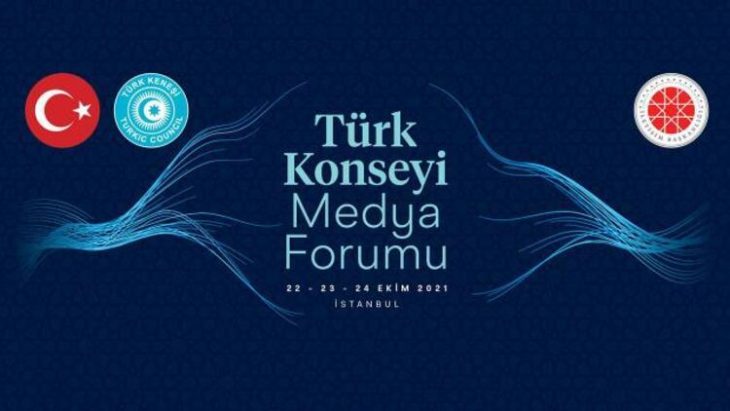
The Turkish Council’s information conference began on 22 October in Constantinople, Turkey’s largest city, and lasted 3 days.
The conference is being held under the motto “Rooted in the past, strong future.” Turkey’s President Recep Tayyip Erdogan sent an official message to the conference participants. Notably, the main targets of the message are Armenia and the Armenians. This was reported by Akunq.net, citing Turkey’s state news agency, “Anadolu.”
According to the source, Erdogan specifically stated in his message: “In our day, parallel to the spread of public information, like all of humanity, we too are frequently subjected to disinformation. As a result of fake and false news, the lives of millions of defenceless people are shattered in the world; they experience serious wounds and dramas.”
It is noteworthy that in Erdogan’s message, only Armenia and the Armenians are cited as specific examples. Referring to the recent Artsakh war, he specifically stated: “No country or society is immune from the destructive impact of digitalised fascism. During the 44-day Nagorno-Karabakh war, we witnessed a hypocritical stance that demonstrated the importance of this issue for our country. The massacre of civilians by the Armenian army and its ballistic missile attacks were never brought to the agenda. International press organs that prattle about the independence and objectivity of information moved in step with Armenia’s official news agency.
The Karabakh war is not the only example of information warfare waged against the facts concerning our countries and the Turkish world. In light of our painful experience, we can all now plainly and clearly see the following truth: just as we do not place our hopes on foreigners in industrial and military matters, neither can we entrust issues related to communication to others. As the Turkish world, we must take the initiative on this matter, exchange experiences, pool our strengths, and seek ways to use our capabilities in the most effective manner.”
Erdogan’s expectations of forming a pan-Turanian army through this conference are also evident.
Let us recall that the Turkish Council is an international organisation uniting Turkic-speaking states, comprising Azerbaijan, Kazakhstan, Kyrgyzstan, and Turkey. Notably, this organisation was founded in 2009 in Nakhichevan. Hungary also participates in the conference with observer status. It is expected that Turkmenistan and the self-proclaimed “Turkish Republic of Northern Cyprus” will later join the organisation.