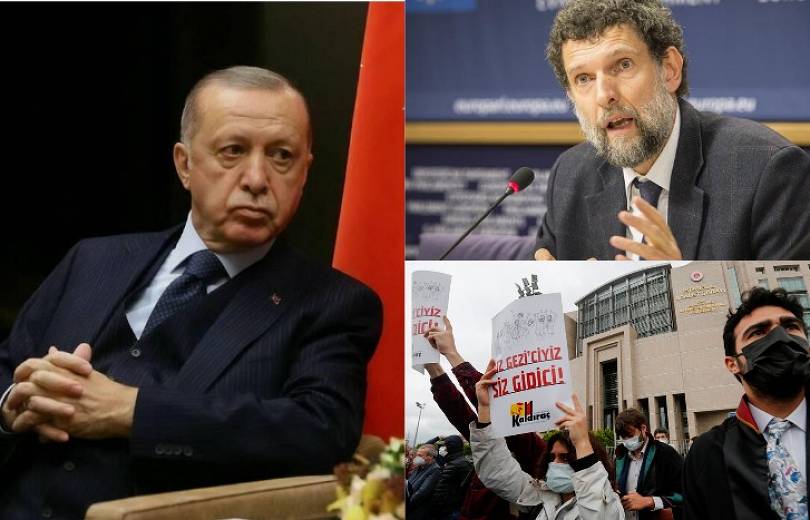
A sharp political crisis is looming in relations between Turkey and the West.
President Recep Tayyip Erdogan has again flown into a rage and, in his anger, announced that he has instructed the country’s foreign ministry to declare the ambassadors of a number of great powers — the United States, Germany, France and seven other countries — “persona non grata” (undesirable persons). Those countries had “dared” to call on the Turkish leader to release the philanthropist and human rights defender Osman Kavala, whose arrest has caused a great stir and commotion in various parts of the world.
“I gave the necessary orders to our foreign minister and told him what must be done: these ten ambassadors must immediately be declared non grata; I have instructed that this be dealt with immediately,” world news agencies quote Erdogan as saying, in remarks made this Saturday in the city of Eskisehir.
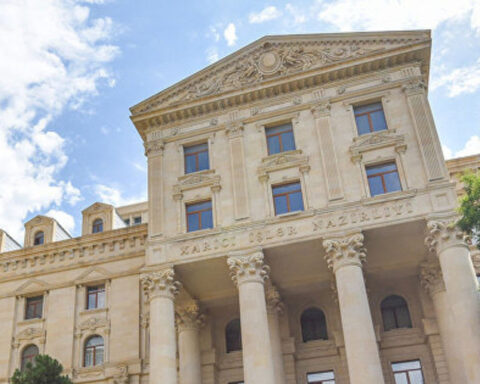
The cause of Erdogan’s fierce wrath was that the ambassadors carrying out diplomatic missions in Turkey from the United States, Germany, France, Canada, the Netherlands, Denmark, Sweden, Norway, Finland and New Zealand issued a joint statement on October 18 calling for the release of the philanthropist and human rights defender Osman Kavala. Immediately afterwards, they were summoned to the Turkish foreign ministry.
“Why are these ten ambassadors making such statements? I told our foreign ministry that we do not have the luxury of hosting this many ambassadors in our country. Is it your job to teach Turkey a lesson? Who are you? Stay away from Kavala. Do you release murderers, terrorists and bandits in your own countries? You always answer, ‘The judiciary is independent.’ That is to say, your judiciary is independent, and ours, therefore, is dependent? Our judiciary is the best example of independence,” Erdogan told journalists.
Osman Kavala, 64, is a Turk, but with a lifestyle and work somewhat different from the Turkish majority. He is a businessman, philanthropist and human rights defender who has financed and taken part in numerous cultural and human rights projects in his country. He is the founder of the Anadolu Kültür AŞ cultural foundation, which supports projects of ethnic and religious minorities. For years he has made efforts, in particular, to reconcile the Turkish majority with Turkey’s Armenian and Kurdish minorities, to reshape the hardened opinions of the Turkish community about Armenians and Kurds, and also to achieve a peaceful solution to the Kurdish question.
In November 2017, Kavala was arrested on charges of organising the protest demonstrations in Istanbul’s Taksim Square in 2013 and of complicity in the notorious coup attempt of 2016.
During the 2013 protests, the Turkish prosecutor’s office also noted the trail of American billionaire and philanthropist George Soros, whom many authoritarian rulers of the world like to accuse of weaving conspiracies against them. Erdogan is no exception.
Recep Tayyip Erdogan also mentioned Soros at a rally held in the city of Eskisehir on Saturday.
“The man named Kavala is Soros’s branch in Turkey. Ten ambassadors are asking for him at the foreign ministry. This is extreme shamelessness,” Erdogan said.
In February 2020, Kavala was acquitted by the court in the case of the 2013 protest actions, but was still not released, because the prosecutor’s office demanded that he be detained under another article, and later added a charge of espionage.
The philanthropist had given an interview to Agence France-Presse the previous week from his prison cell, remotely: he said that he feels like an instrument through which Erdogan, who has ruled Turkey for 20 years, tries to present all opposition figures as foreign agents.
In 2019, the European Court of Human Rights recognised Kavala’s arrest as politically motivated persecution and an attempt by the Turkish authorities to “silence the activist and human rights defender, frighten others so that they refrain from such activity, and paralyse civil society in the country.”
In September of this year, the Council of Europe gave Turkey until December to release Kavala pending trial. Otherwise, the Council of Europe threatens to subject Ankara to disciplinary proceedings. The Turkish authorities, however, as in all cases, are not particularly “frightened” or alarmed this time either by the decisions of the European Court or the Council of Europe.
Germany’s foreign ministry, commenting on Erdogan’s remarks quoted by Reuters, while maintaining caution, only noted that it is holding “intensive consultations” with the other nine countries.
Norway’s foreign ministry told the Reuters agency that the Norwegian embassy in Ankara has not yet received any procedural information from the Turkish authorities about the expulsion of the ambassador.
“Our ambassador has done nothing that merits expulsion. We will continue to call on Turkey to respect democratic norms and the rule of law, which it has undertaken to do under the European Convention on Human Rights,” Norwegian foreign ministry spokesman Trude Maaseide told the agency.
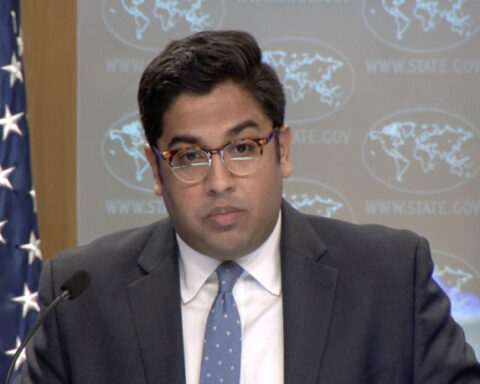
An official representative of the US State Department said they are aware of the statements about Ankara’s intention to expel the ambassadors of a number of countries, including the American one, and that in that connection the State Department has demanded clarification from the Turkish foreign ministry.
“We have seen these reports and want clarity from Turkey’s foreign ministry,” a senior diplomat told RIA Novosti.
Experts believe that Erdogan will not go far in confronting the allies, but his démarche is unlikely to remain without a trace.
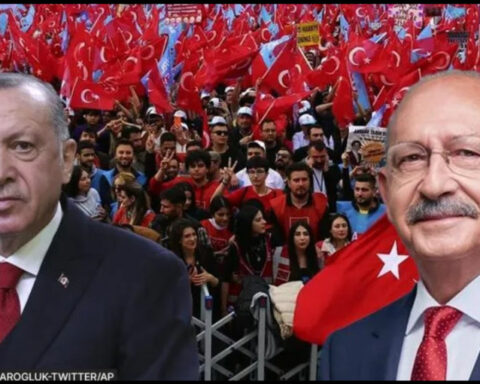
Instead, Erdogan is being sharply criticised by his opponents within the country. Republican People’s Party leader Kemal Kilicdaroglu wrote on Twitter that Turkey’s president is “rapidly leading the country into an abyss.” The politician explained the scandal over the expulsion of the diplomats by saying that Erdogan is seeking an excuse for the government’s mistakes, which have led to a severe economic situation in the country.
In general, Turkey’s president often resorts to aggressive methods to cover up his own mistakes. True, they are each time accompanied by warnings from the European Union, but more often than not they remain at the level of merely remote criticism.