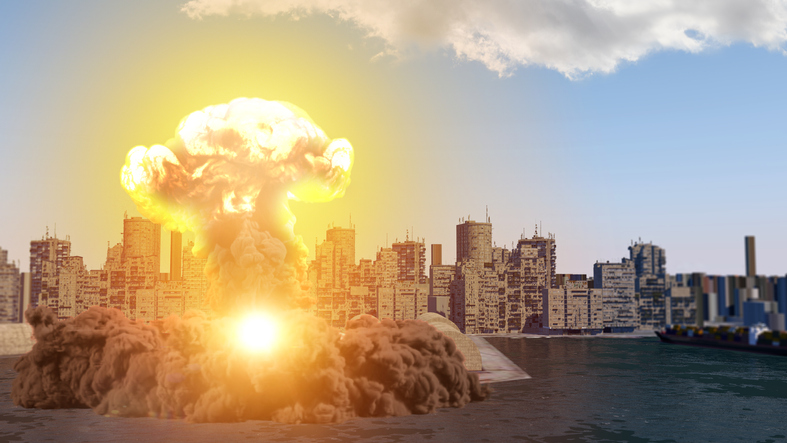
August 4 has become a tragic date for Beirut, the capital of Lebanon. On that date last year, a horrific explosion shook all of Lebanon, killing more than 200 citizens and leaving 5,000 wounded.
On the anniversary of the Beirut port explosion, the France press agency has published the aftermath of the disaster in figures.
Thus, as a result of the devastating explosion, the following have been recorded:
214 dead, according to official data:
6,500 wounded:
300,000 people were temporarily left homeless immediately after the explosion:
More than 70,000 people were left unemployed:
73,000 residences were damaged:
9,200 buildings were damaged:
163,000 schools and educational institutions were damaged:
106 health facilities, including 6 hospitals and 20 infirmaries, were damaged:
2,750 tons of ammonium nitrate, according to the authorities, was stored in the port’s warehouses and caused the explosion:
That ammonium nitrate had been stored for 6 years in warehouse number 12 of the port:
According to the American institution measuring the intensity of explosions, the force of the blast was equivalent to an earthquake of 3.3–4.5 magnitude:
200 kilometres is the distance between Lebanon and Cyprus, where the sounds of the explosion were heard:
The Lebanese government set a period of 5 days to conduct an administrative investigation into the explosion:
To this day, no one has been held accountable:
6 days after the explosion, the Lebanese government, headed by Hassan Diab, submitted its resignation:
It has been 359 days that a caretaker government has been running Lebanon, against the backdrop of the absence of agreement among political forces to form a new government. On 30 July, Najib Mikati was appointed prime minister and called upon to form a new government: