Well-known journalist Ismayil Saymaz has published a piece on the online page of “Halk TV” in which he recounts the issue of the opening of the historic mosque of Ani.
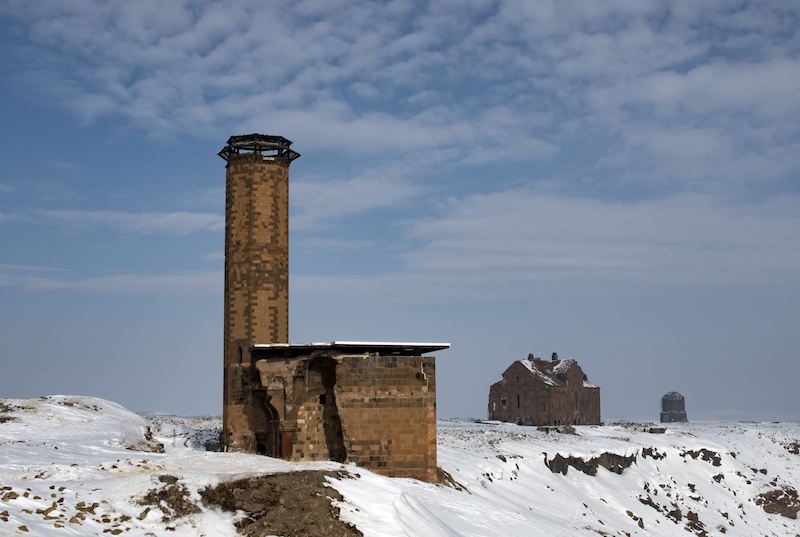
“The capital of the Armenian kingdom was subjected over the course of history to the invasions of Byzantium, the Georgian princes, the Seljuk Turks, the Mongols and the Zakarians. Ani bears traces of all those periods. Cathedral churches, pagan temples, bathhouses, caravanserais and two mosques. One of those mosques is called Abu Muhammaran, of which only fragments of the minaret survive to our day. The second is the Abu Manuchihr mosque, built by Abu Manuchihr Beg in 1072 after the conquest of the city of Ani by the Seljuks. It is considered the first Turkish mosque in western Armenia. It was built on the edge of a deep gorge along the Arpachay river, which is considered the border line between Turkey and Armenia, and however unbelievable it may seem, it is being prepared to be reopened for worship. Through a protocol signed between the Ministry of Culture, Science, Arts and Technology and the Agency for Regional Development, the historic mosque was transferred to the Religious Affairs Directorate of the city of Kars, that is, the muftiate. For the first time, the call to prayer was sounded on 3 August last year. Now the ratification of this protocol by the Religious Affairs Directorate and the appointment of an imam are awaited.”
Ismayil Saymaz then continues his article with the explanations given on this matter by the governor of Kars, Tuncer Türker Öksüz: “Visitors to Ani had expressed the need for a mosque. Thus the needs of tourists, residents of the area and officials for worship will be met. The real aim is to revive the first Turkish mosque in Anatolia.”
Interpreting this explanation of the governor, Ismayil Saymaz does not find plausible the claim that tourists visiting the ruins of Ani feel the need for a mosque. He points out that the village of Ocaklı, adjacent to the ruins of Ani, already has a mosque. The officials are from the residents of that village, and if they need one, they can make use of the mosque of this village. “I should note that the Abu Manuchihr mosque lacks the ablution facility — that is, the place for washing the hands and feet — which is necessary before performing the namaz prayer.”
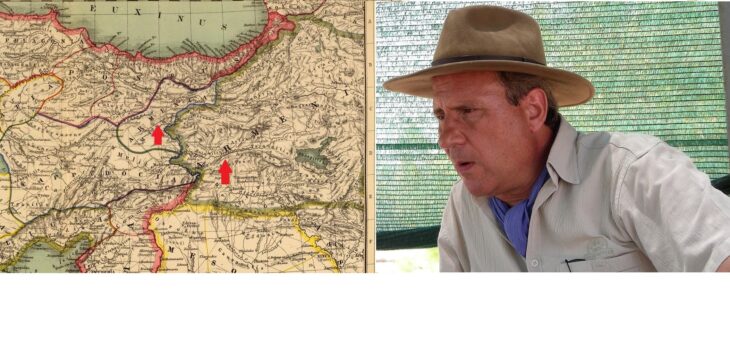
Saymaz has also obtained opinions on this matter from an expert. That expert directed the archaeological excavations from 2012 to 2019 and contributed to the inclusion of the ruins of Ani in the UNESCO World Heritage List. Prof. Fahriye Bayram of the Department of Classical Archaeology of Pamukkale University expressed her astonishment when she heard that stone floors and an iron door had been built in the mosque, a loudspeaker had been installed on the minaret, and wooden shelves and carpets had been placed on the floor.
“It is impossible. During my term of office I strongly opposed the reopening of that historic structure for worship. That structure cannot receive large numbers of visitors. The foundation has cracks. The material is also unsuitable. You know, the current government has a great desire to open mosques. Even during my time these desires were expressed, and I wrote reports explaining the inappropriateness. At that time they postponed it. I find it dangerous to pursue such an initiative before the foundation is reinforced,” says Prof. Fahriye Bayram.
She also warns that the structure, being on the edge of a gorge, is subject to serious dangers. She also expresses concern about the electrical network. The very existence of a mosque within such an area of historic ruins is unprecedented. Certainly important is the fact that it is the first mosque on the territory of Armenia; the octagonal minaret is a Central Asian tradition. Great is the historic significance of Ani. It is one of the important stops on the Silk Road. Ani is the great city of its era. It preserves traces of all these features. For that reason I grieve greatly over this decision.”